
Pickleball Court Resurfacing
Pickleball Court Resurfacing in Las Vegas
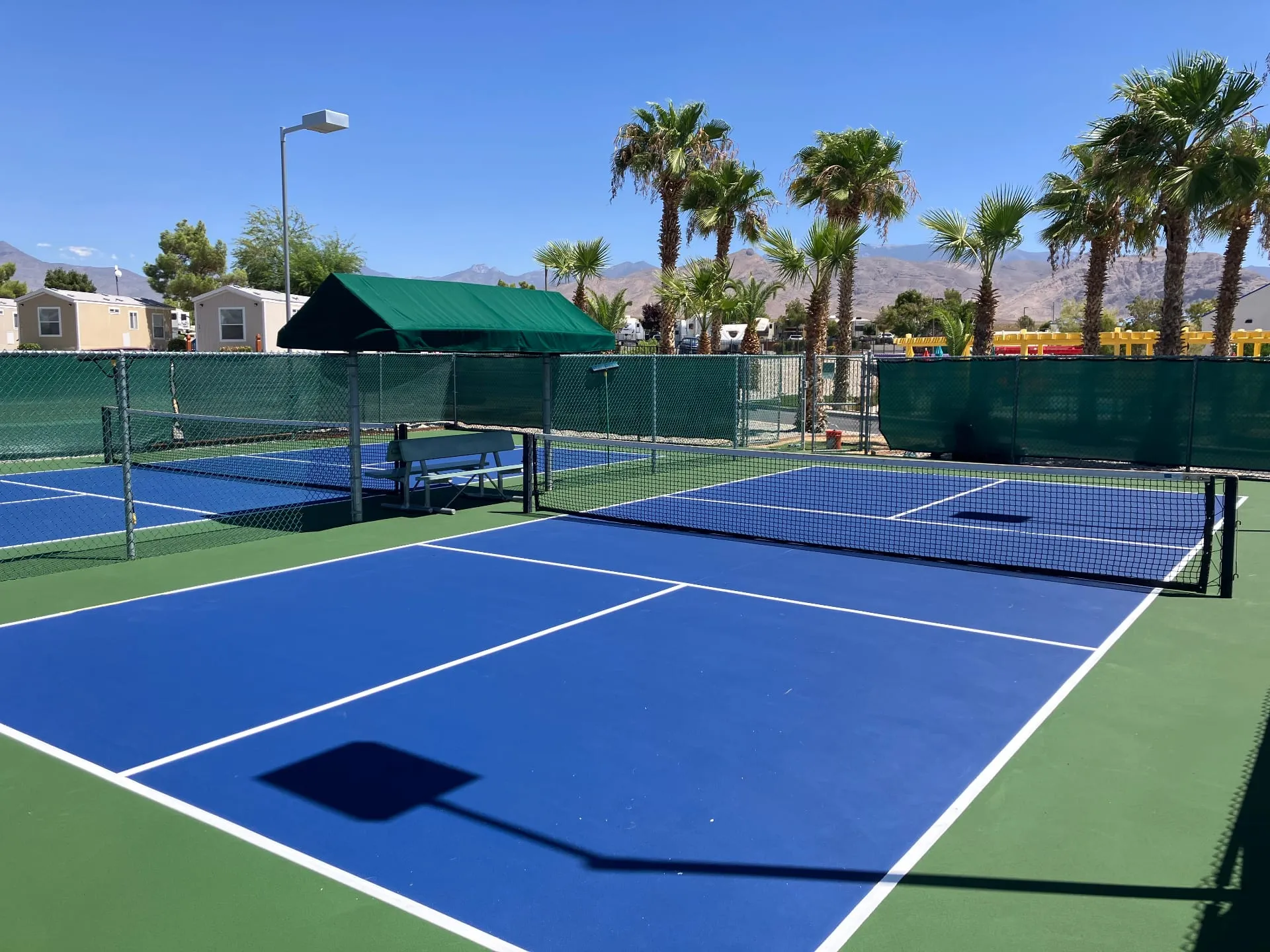
A single court runs $4,000 to $8,500 and is back in play in 1 to 2 days. Here is how to tell whether yours needs it, what the coating system actually is, and what resurfacing will not fix.
What resurfacing a pickleball court means
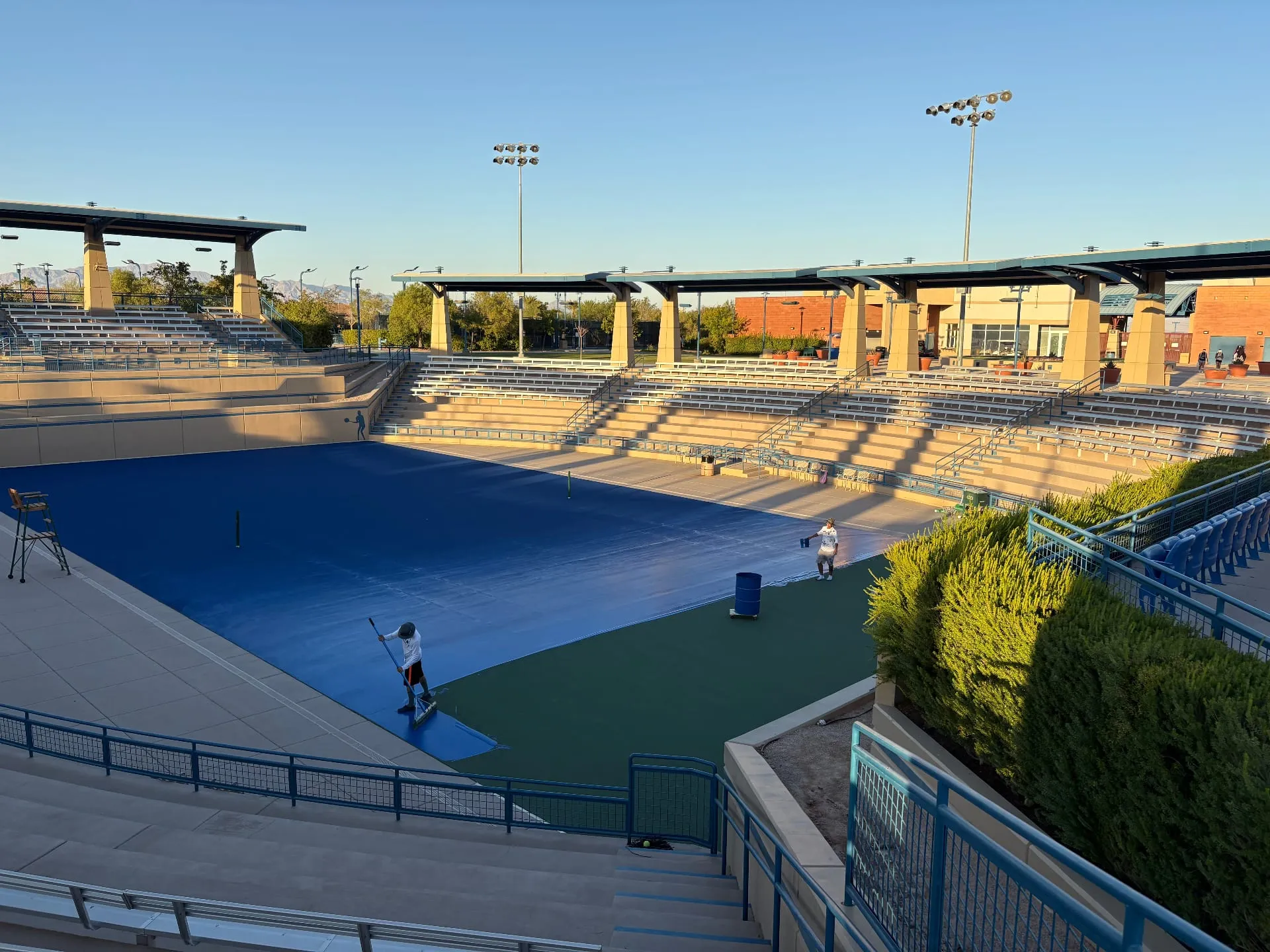
Resurfacing rebuilds the acrylic playing surface on top of your existing slab. We pressure clean, repair cracks and low spots, apply a sanded acrylic resurfacer to restore texture, then two or more pigmented color coats, then fresh regulation striping. You keep the foundation you already paid for and get a new court to play on.
Pickleball courts tend to need it sooner than tennis courts of the same age. All the play is concentrated in a 20 by 44 foot box, and most of that inside the kitchen and along the baseline, so the wear that a tennis court spreads over 78 feet lands in a much smaller area.
Six signs your court is due
Walk the court and check these. Any two together usually means it is time.
The texture is gone
Run a hand across the kitchen and then the back corner. If the middle feels slick and the corner still has grit, the sand in the coating has worn through where people stand. That is a traction problem before it is a looks problem.
Color has faded unevenly
Nevada UV bleaches acrylic from the top down. Blotchy fade, chalk on your shoes, or a court that looks two different colors in raking light all mean the pigment layer is spent.
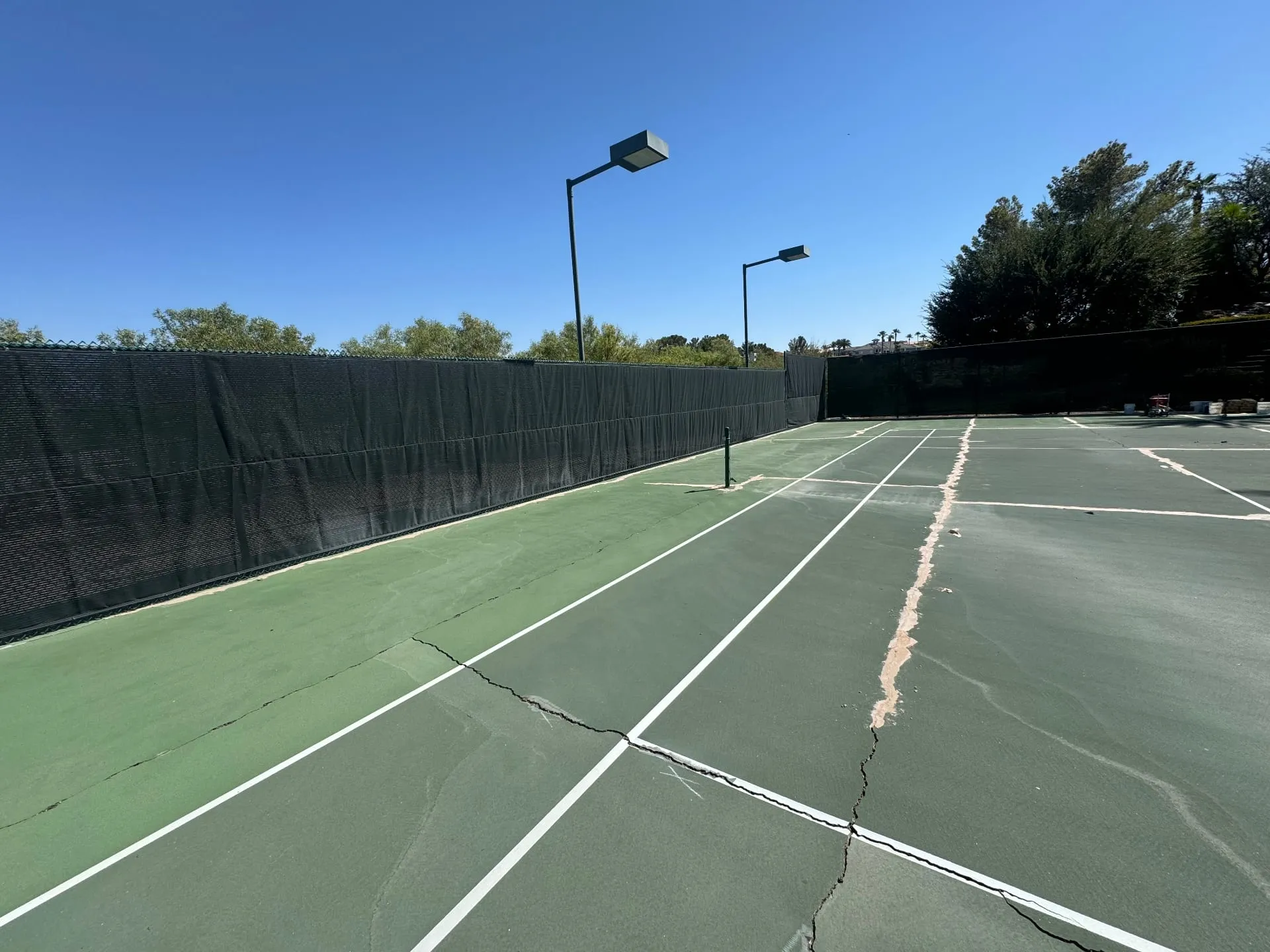
Hairline cracks are spreading
Fine surface crazing in the coating is normal and repairable. Cracks that have widened enough to catch a fingernail, or that run in the same line across a joint, are telling you about the slab underneath.
Water sits after a wash
A court should sheet dry. Puddles that linger in the same spots mean low areas, which we can patch during a resurface if they are shallow and need grinding or a structural fix if they are not.
The ball plays dead in patches
Bounce a ball at the baseline, mid-court, and kitchen. A noticeably duller bounce in one zone means the coating has thinned or delaminated there, and it will keep spreading outward.
Lines are ghosting or lifting
Line paint sits on top of the color coats, so it fails first. Lines flaking at the edges usually mean the coating beneath them has lost its bond, not that the lines were painted badly.
The coating system
What is actually going on the court
An acrylic court surface is a layered system, not a coat of paint. Each layer does a different job, and the reason a cheap resurface fails early is almost always a layer left out.
Crack repair and patching comes first: static cracks filled and feathered, shallow low spots ground or filled so water sheets off instead of pooling.
Sanded acrylic resurfacer is the body of the system. Silica sand suspended in acrylic builds the texture that gives the court its grip and its playing speed. This is the layer that wears out, and the layer skipped when a quote comes in suspiciously low.
Pigmented color coats, two or more, carry the color and the final texture.Regulation striping goes on last, measured and squared on site.
Repair, resurface, or rebuild
Three different jobs at three very different prices. Knowing which one you need is most of the value of a site visit.
Spot repair
Static cracks filled and feathered, a low spot ground back, a patch of failed coating cut out and rebuilt. The right call when the court is generally sound and one area has gone wrong. Days, not weeks, and a fraction of a full resurface.
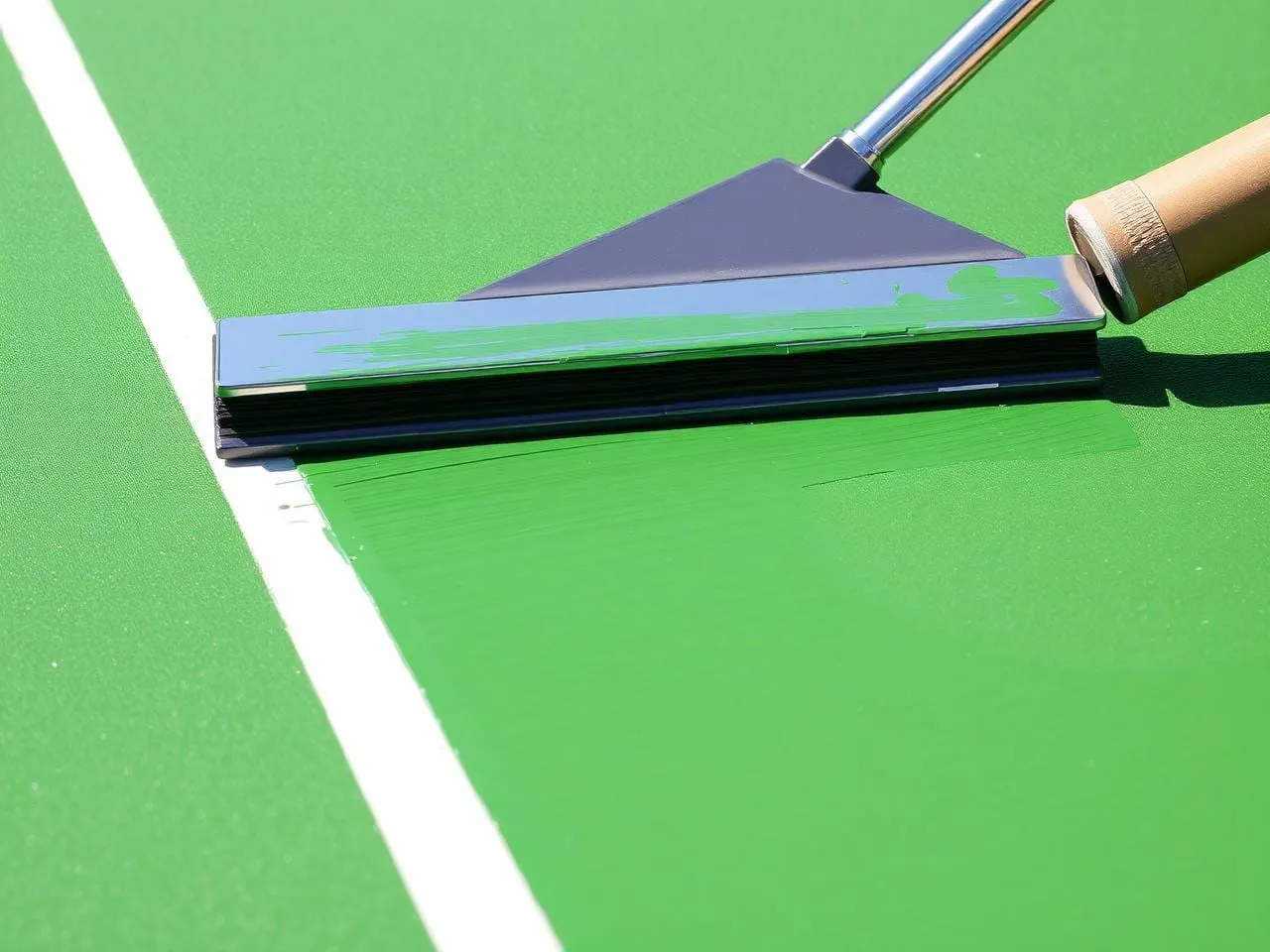
Full resurface
The default at 5 to 8 years: clean, repair, sanded resurfacer, two or more pigmented acrylic coats, fresh regulation striping. Restores texture, color, and playing speed on a slab that is still structurally sound.
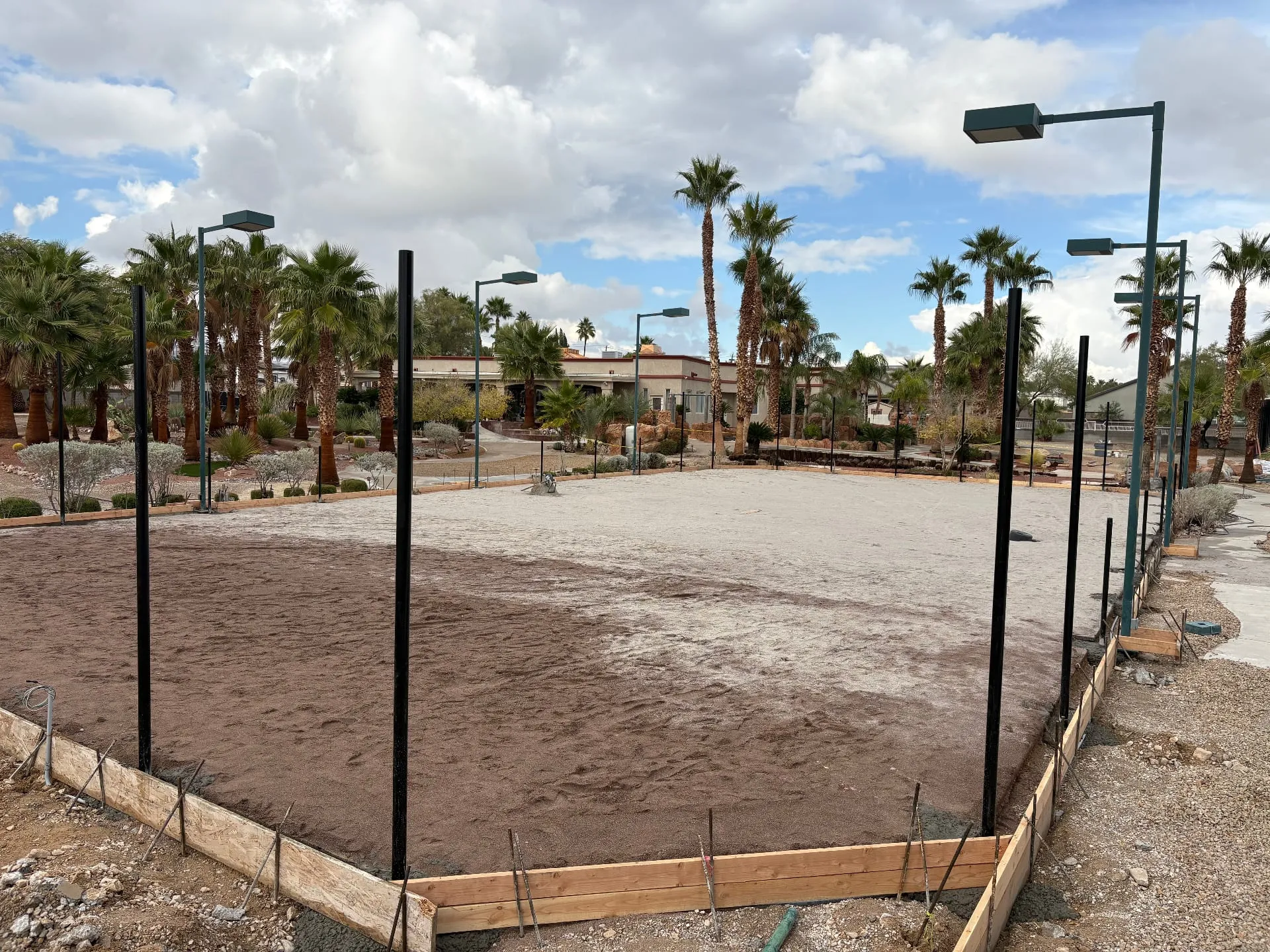
Reconstruction
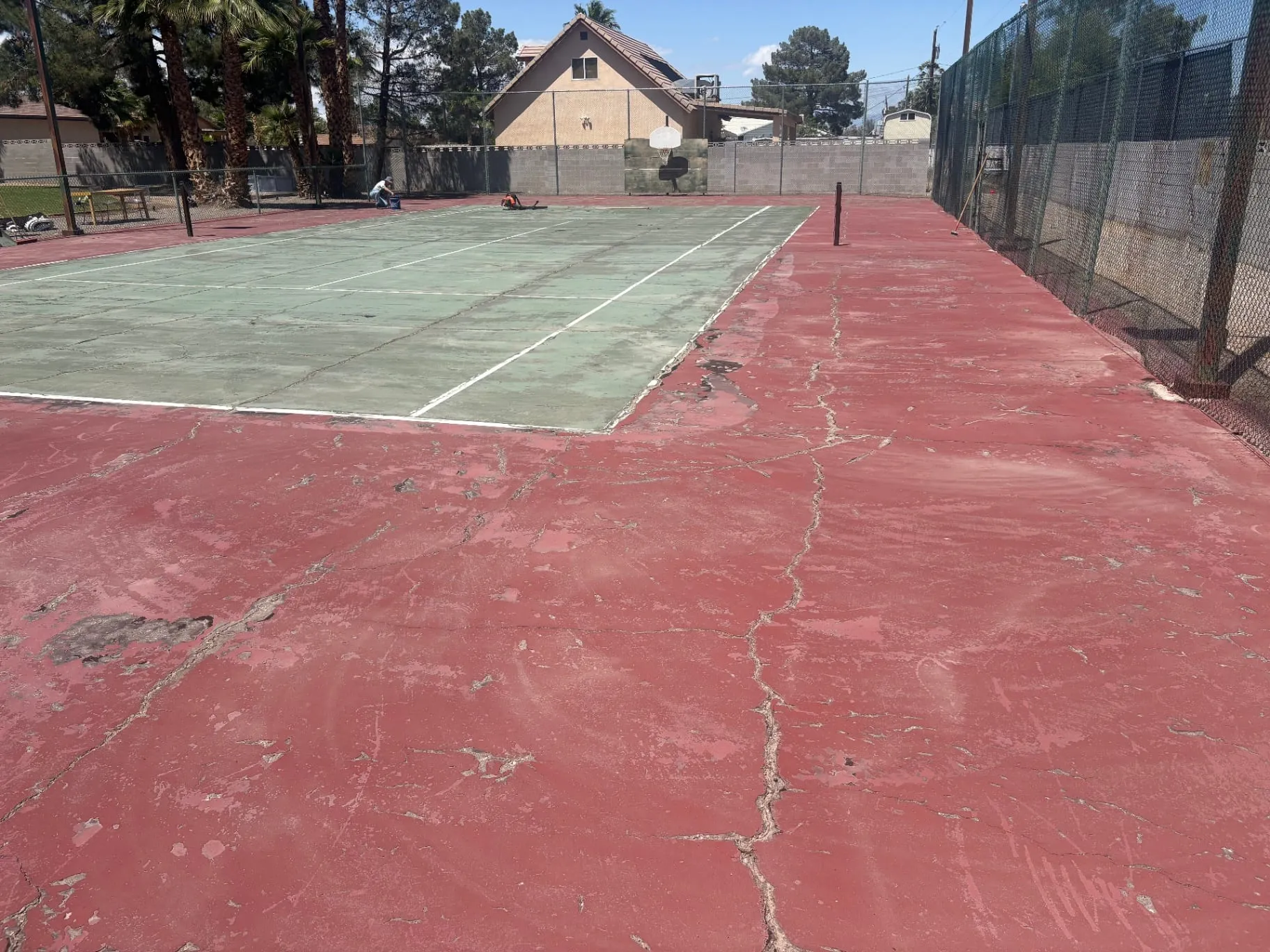
When the slab is the problem, coating is money spent twice. Heaving, settling, moving cracks, or grading that will not drain need the base addressed. We would rather tell you this at the quote than after your new surface cracks in the same line.
What a resurface will not fix
Coating is 3 to 5 millimetres thick. It cannot bridge a slab that is moving, and it will not re-grade a court that does not drain.
A crack that is still working will telegraph through new coating in the same line, usually within a season or two of Nevada temperature swings. Standing water will still stand. A slab that has settled at a joint will still have a lip. Resurfacing those courts is money spent twice, and we will say so at the quote rather than take the easier job.
The honest version of this conversation is a site visit, a written scope, and a straight answer about which of the three paths above your court is on. That part is free.
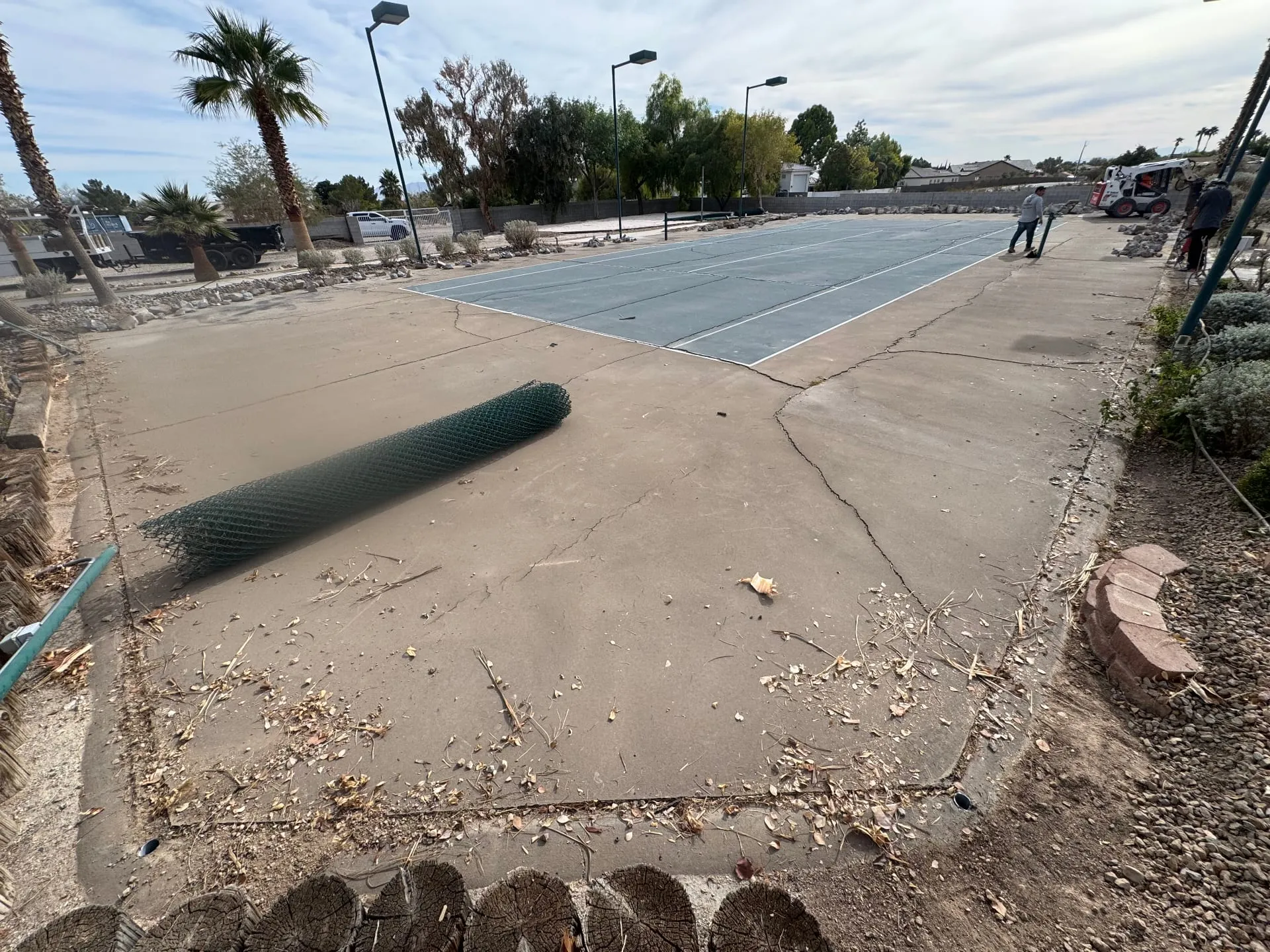
While the court is closed
The cheapest time to change anything
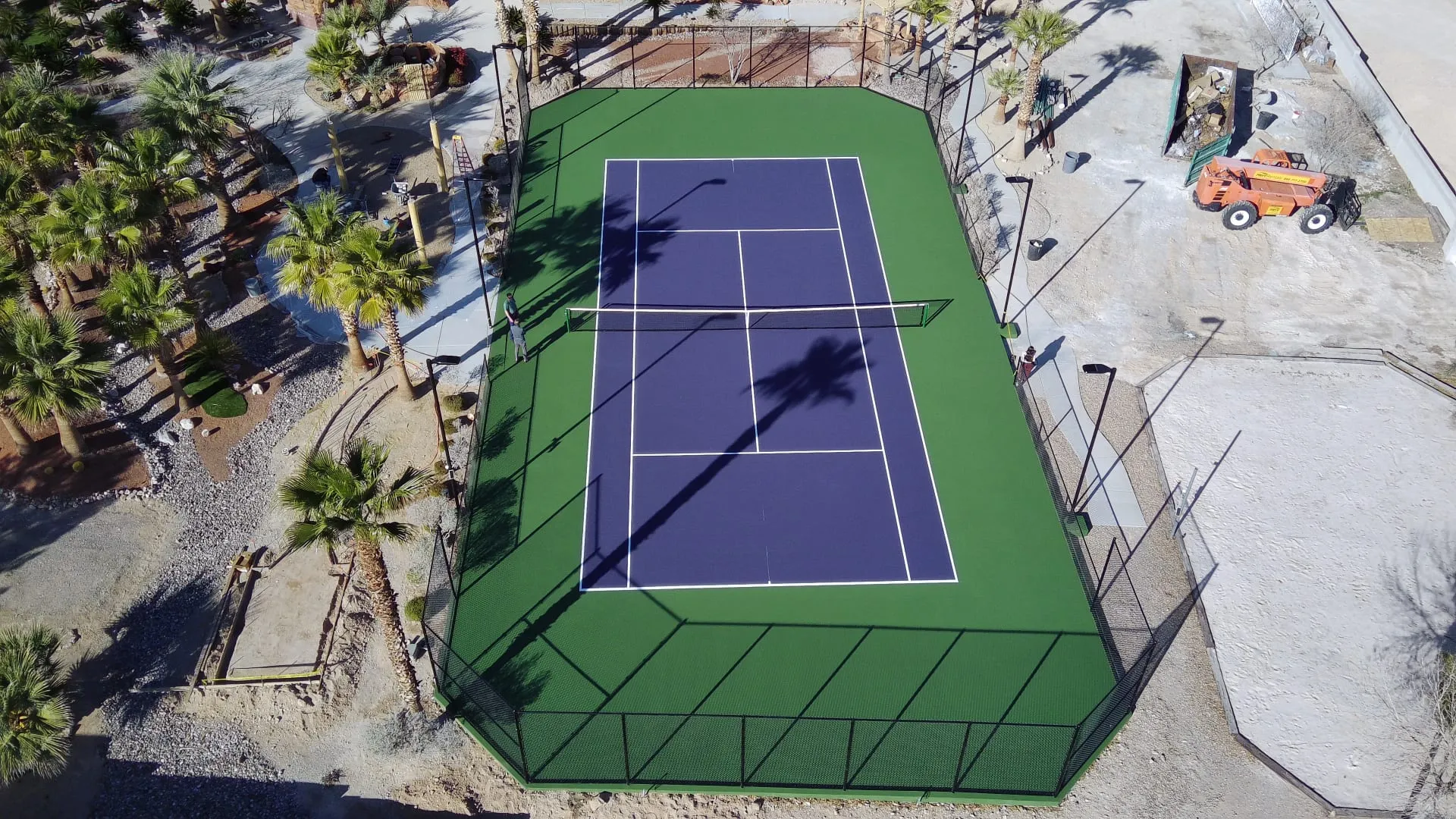
Color comes from the pigmented coats going on anyway, so a new palette costs no more than repeating the old one. Two-tone color blocking, a painted logo, and a full change of scheme are all effectively free at resurface time and expensive at any other time.
It is also the moment to add a sport. Blended pickleball lines on a tennis court, or a basketball key alongside a pickleball layout, cost a fraction of what they do as a separate visit. Seecourt line striping for how the layouts work.
If you are weighing a resurface against a new court, thepickleball court cost guide breaks down both.
Guides and resources
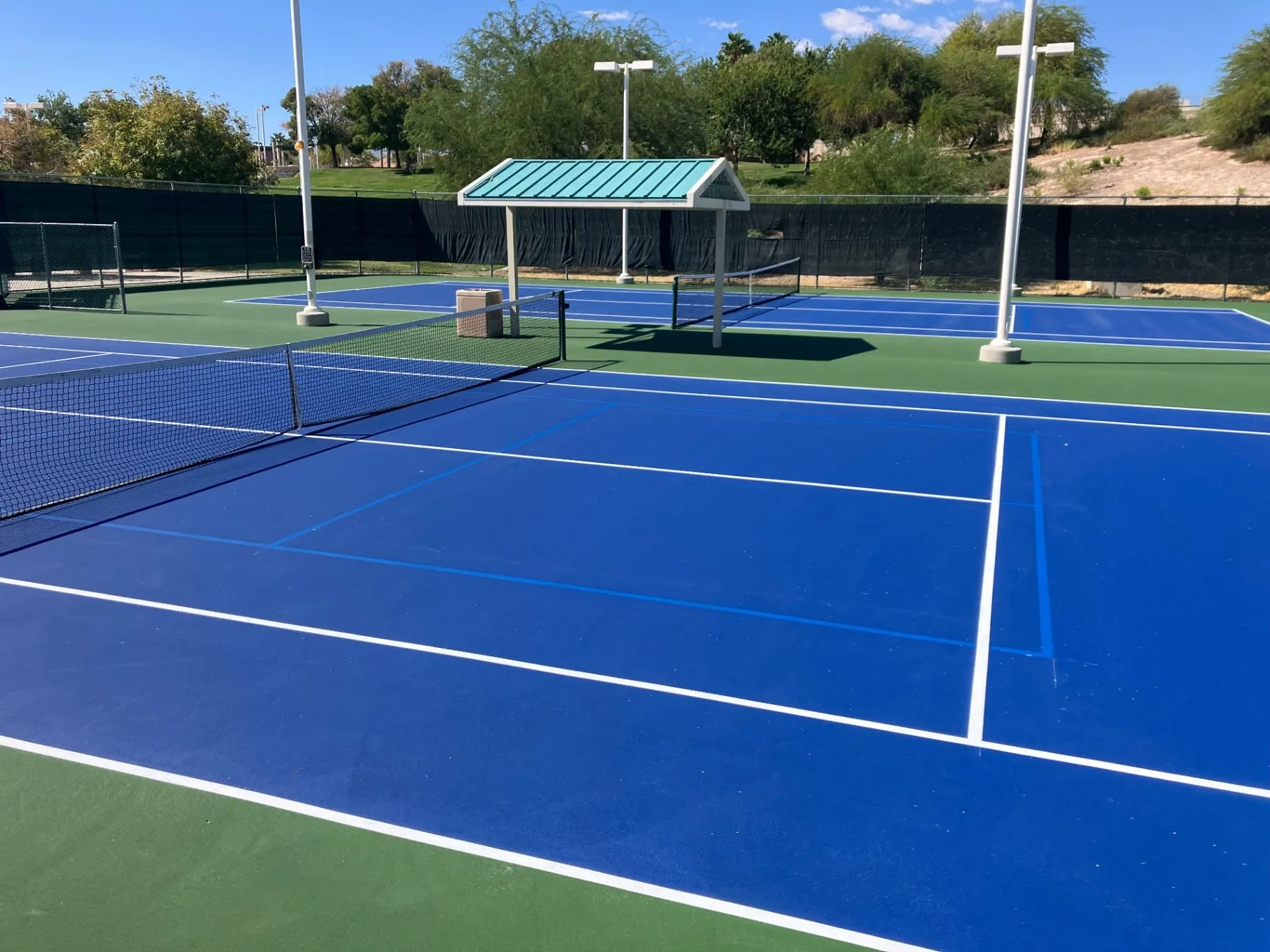
September 12, 2026
Pickleball vs Tennis: Every Difference That Matters to a Court Owner
Pickleball and tennis differ in court size, net height, and scoring. Here's what that means if you own a court in Las Vegas or Henderson.
Read more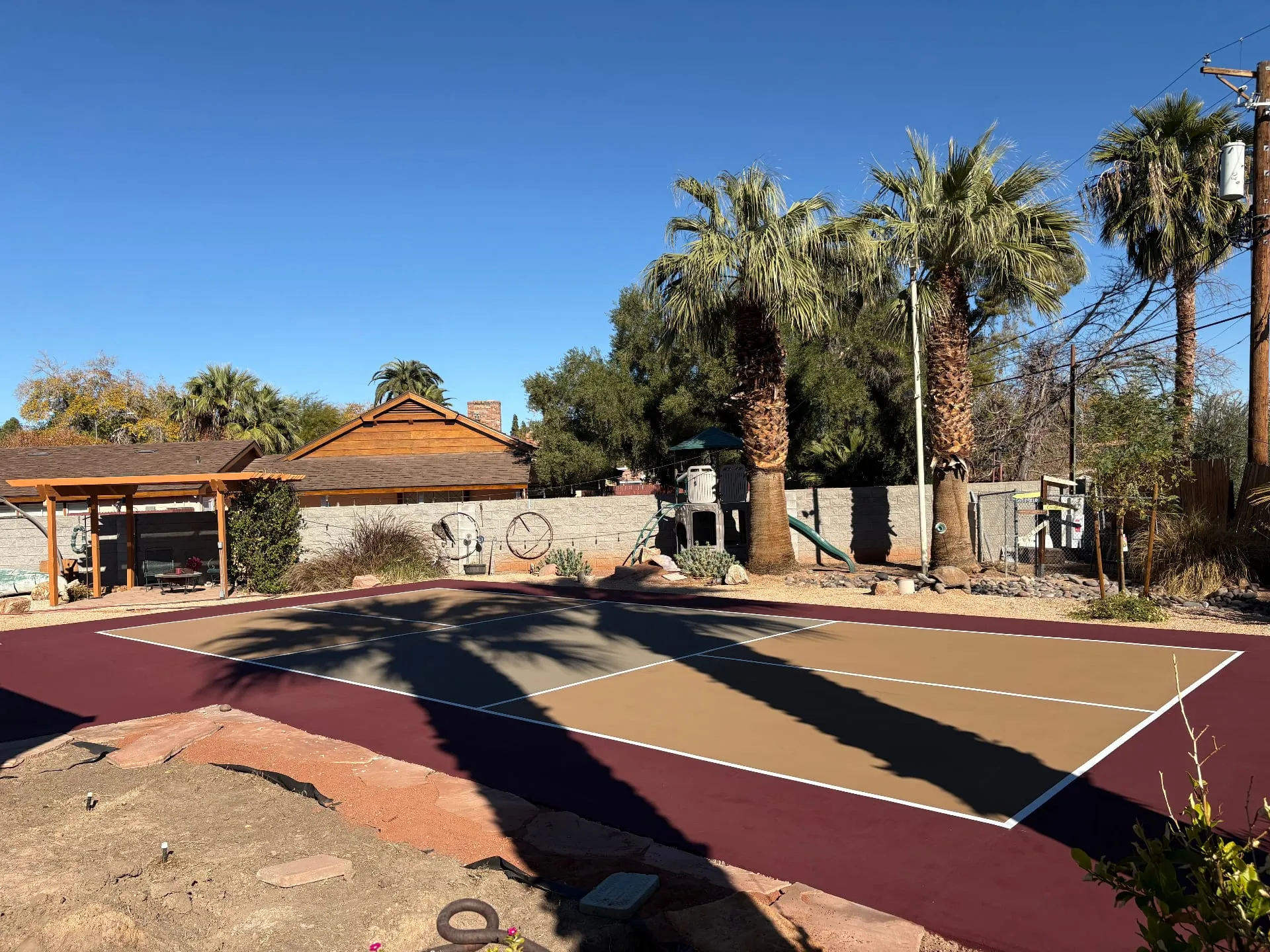
September 7, 2026
Pickleball Court Colors: Best Picks for Vegas Heat
Blue and green are lead pickleball court colors, but Las Vegas heat changes the math. See what stays cool, holds contrast, and lasts.
Read moreAugust 18, 2026
Pickleball Court Surface: What It's Made Of and Which System Fits Your Vegas Court
What is a pickleball court surface made of? See the acrylic systems built for Las Vegas heat, soil, and play.
Read moreJuly 17, 2026
How Much Does a Pickleball Court Cost in Las Vegas?
2026 price ranges, add-ons, resurfacing, and the local soil and heat factors that move the number.
Read more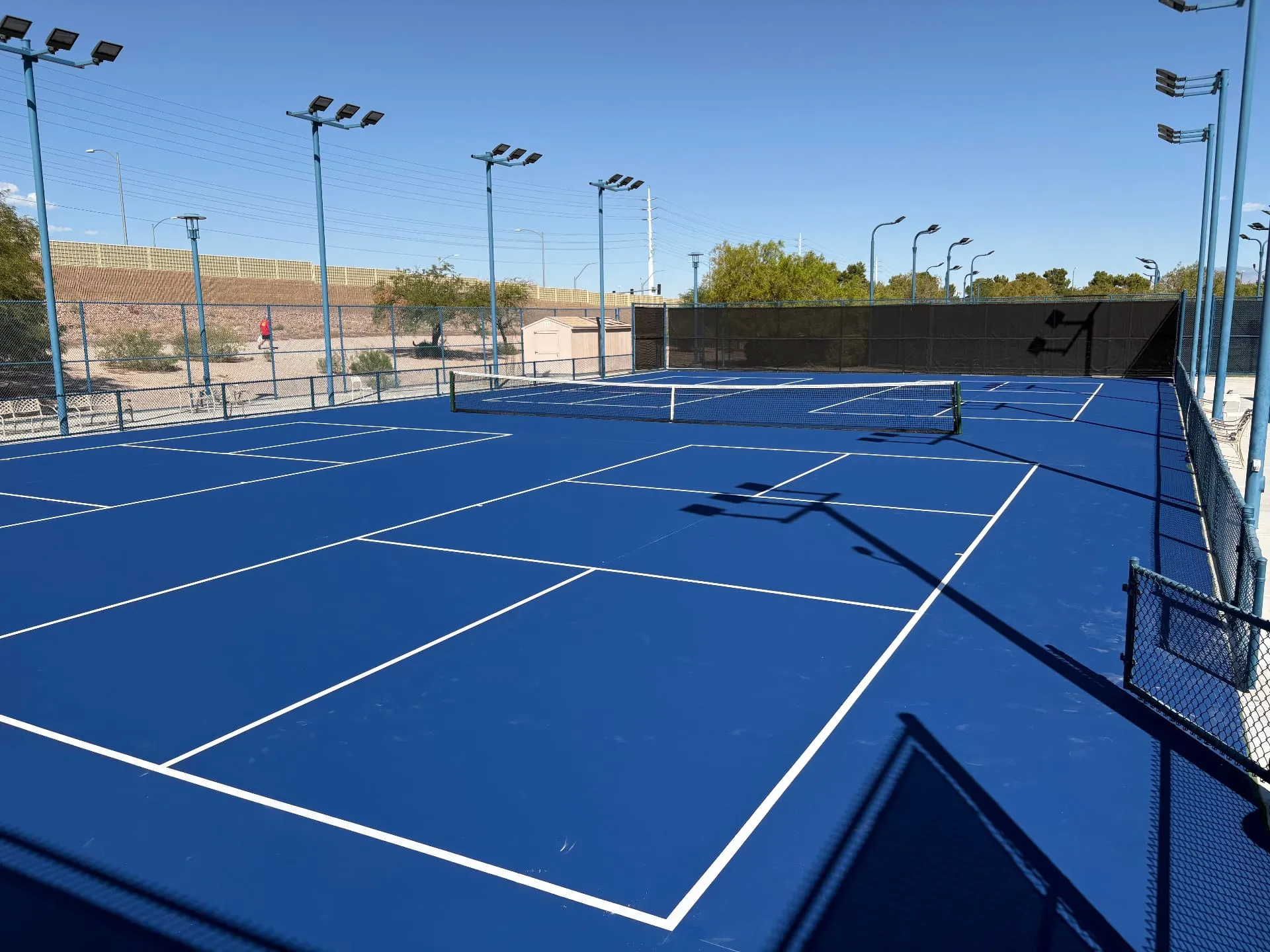
July 17, 2026
Pickleball Court Dimensions
Official 20x44 sizing plus the total footprint, kitchen, orientation, and Southern Nevada layout planning.
Read more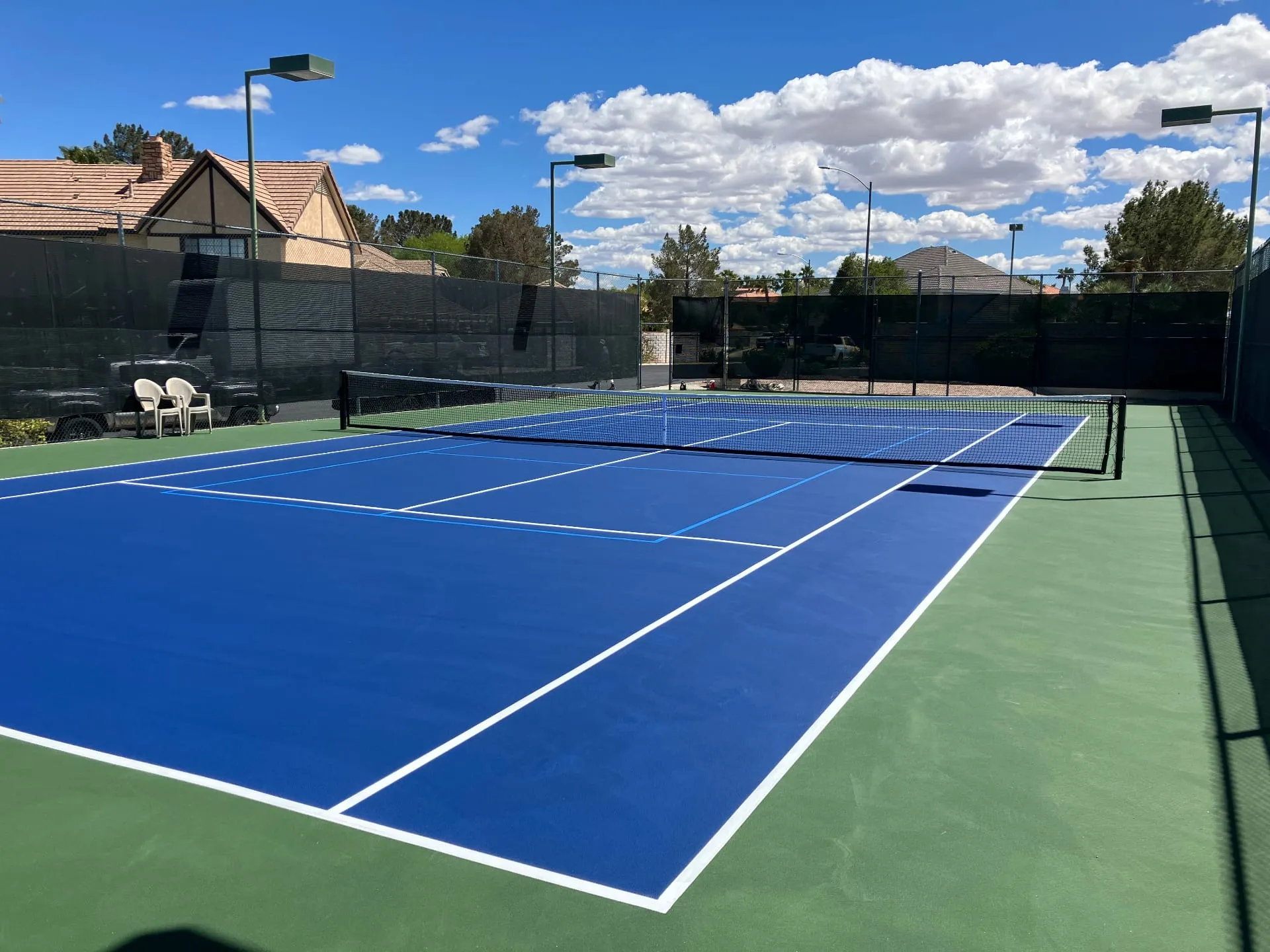
July 17, 2026
Tennis Court Surfaces: Every Type of Court, and the Two That Belong in Las Vegas
Tennis courts come in four surface types, but only two work outdoors in Las Vegas: acrylic hard court and cushioned acrylic. Here is why, and where every other surface belongs.
Read moreFrequently Asked Questions
How much does it cost to resurface a pickleball court in Las Vegas?
A standard acrylic resurface of a single pickleball court runs $4,000 to $8,500. Where you land depends on how much crack repair and patching the slab needs first, whether you are changing colors, and how many courts we can do in one mobilization. Multi-court facilities cost less per court.
How often does a pickleball court need resurfacing?
Every 5 to 8 years in Southern Nevada. Pickleball courts often reach that point sooner than tennis courts of the same age because play is concentrated in a much smaller area, so the kitchen and baseline wear faster than the rest of the surface.
What does a resurface actually include?
Pressure cleaning, crack and low-spot repair, a sanded acrylic resurfacer to rebuild texture, two or more pigmented acrylic color coats, and fresh regulation striping. The result is a new playing surface bonded to your existing slab.
What will a resurface not fix?
Anything structural. If the slab is heaving, settling, or has moving cracks, new coating will crack again in the same places within a season or two. Standing water from bad grading does not go away either. Those courts need repair or reconstruction first, and we will tell you which one you are looking at before you spend money on coating.
How long is the court out of play?
Usually 1 to 2 days of work in warm weather, then cure time before play. We schedule around your season where we can, and for multi-court facilities we can phase the work so some courts stay open.
Can I change the court colors when I resurface?
Yes, and it is the cheapest time to do it. Color is set by the pigmented acrylic coats going on anyway, so a new palette costs no more than repeating the old one. It is also the moment to add blended pickleball lines, a painted logo, or two-tone color blocking.
Get a written resurfacing quote
Free site visit and itemized quote across Las Vegas, Henderson, and Southern Nevada.