
Court Line Striping
Court Line Striping in Las Vegas
Regulation striping for pickleball, tennis, basketball, and multi-sport courts across Southern Nevada. Including the job most people are actually looking for: adding pickleball lines to the tennis court you already own.
Striping is layout work, not paint work
Court line striping is the process of measuring, masking, and painting regulation playing lines onto a finished court surface. It can be the last step of a new build or a resurface, or a standalone job on a court whose coating is still sound. A single pickleball layout on a court that does not need resurfacing is typically one day of work.
The paint is the easy part. What separates a court that plays right from one that does not is the layout: every dimension measured and squared on site against the net line, not copied off the lines that happened to be there before. Courts drift out of tolerance a little with each repaint that traces the last one, which is why we lay out from scratch.
The most common job we stripe
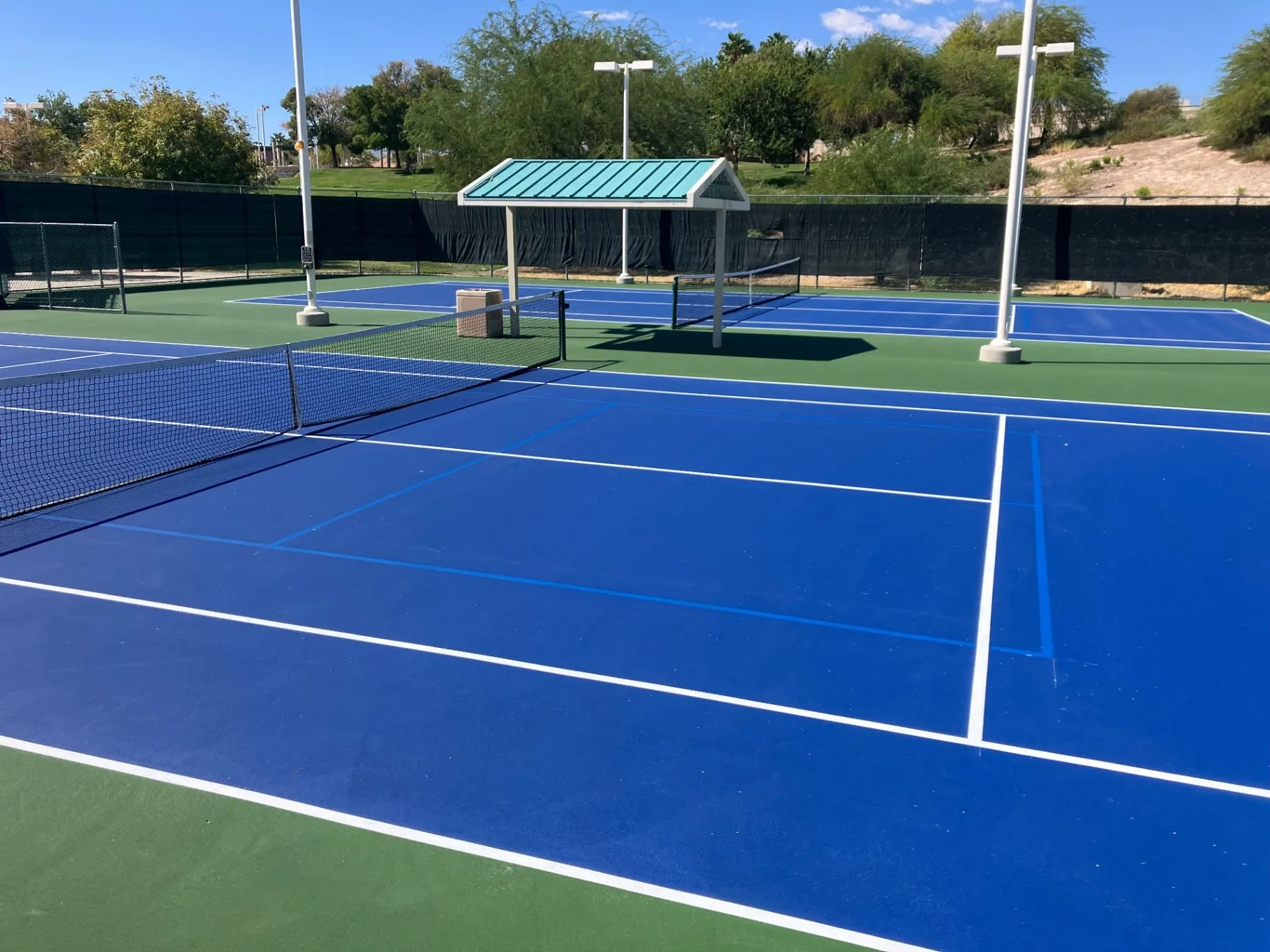
Adding pickleball lines to an existing tennis court
A standard tennis court has room for one pickleball court laid out across the middle, or up to four using the full footprint. We measure the space, confirm what fits, and stripe it without touching the tennis lines, so the court keeps doing both jobs.
The condition of the coating decides the scope. On a sound surface we stripe and you are playing the next day. On a worn or cracked surface we resurface first, because new lines bonded to a failing coating fail with it. We will tell you which one you have before you commit to anything.
Nets are the other half of the conversion. Semi-permanent nets with retractable wheels need no drilling. Permanent posts need footers cored into the slab, and on a post-tension court that means an x-ray first so we do not hit a tendon.
Choosing a layout
Blended or contrast lines
Blended lines sit a shade or two off the court color. Pickleball players read them fine, tennis players stop noticing them. This is the usual choice on a shared court where tennis is still the primary sport.
Contrast lines are a full second color and are much easier to pick up at speed, which suits courts where pickleball is the main use, courts with mixed-ability play, or anywhere lighting is marginal.
On a conversion we sand the old lines down and add an extra coat so they do not ghost through. Skipping that step is why you see faint tennis lines under pickleball courts around the valley.
What we stripe to
Every layout goes down to the governing body for that sport, measured on site.
| Sport | Standard | Court size | Line width | Detail |
|---|---|---|---|---|
| Pickleball | USA Pickleball | 20 ft x 44 ft | 2 in wide, all lines inside the court dimension | Non-volley zone 7 ft from the net on each side |
| Tennis | USTA / ITF | 36 ft x 78 ft (doubles) | 2 in wide, baselines up to 4 in | Center service line and mark 2 in wide |
| Basketball | FIBA / NCAA | 50 ft x 94 ft (full) | 2 in wide | 3-point arc and key vary by governing body |
| Padel | FIP | 20 m x 10 m | 5 cm wide | Service lines 6.95 m from the back glass |
Sports and markings we lay out
Pickleball
Regulation 20 by 44 layouts, single or multiple courts inside an existing footprint, in blended or contrast lines.
Tennis
Full USTA singles and doubles layouts, center service lines, and baseline marks squared to the net posts.
Basketball
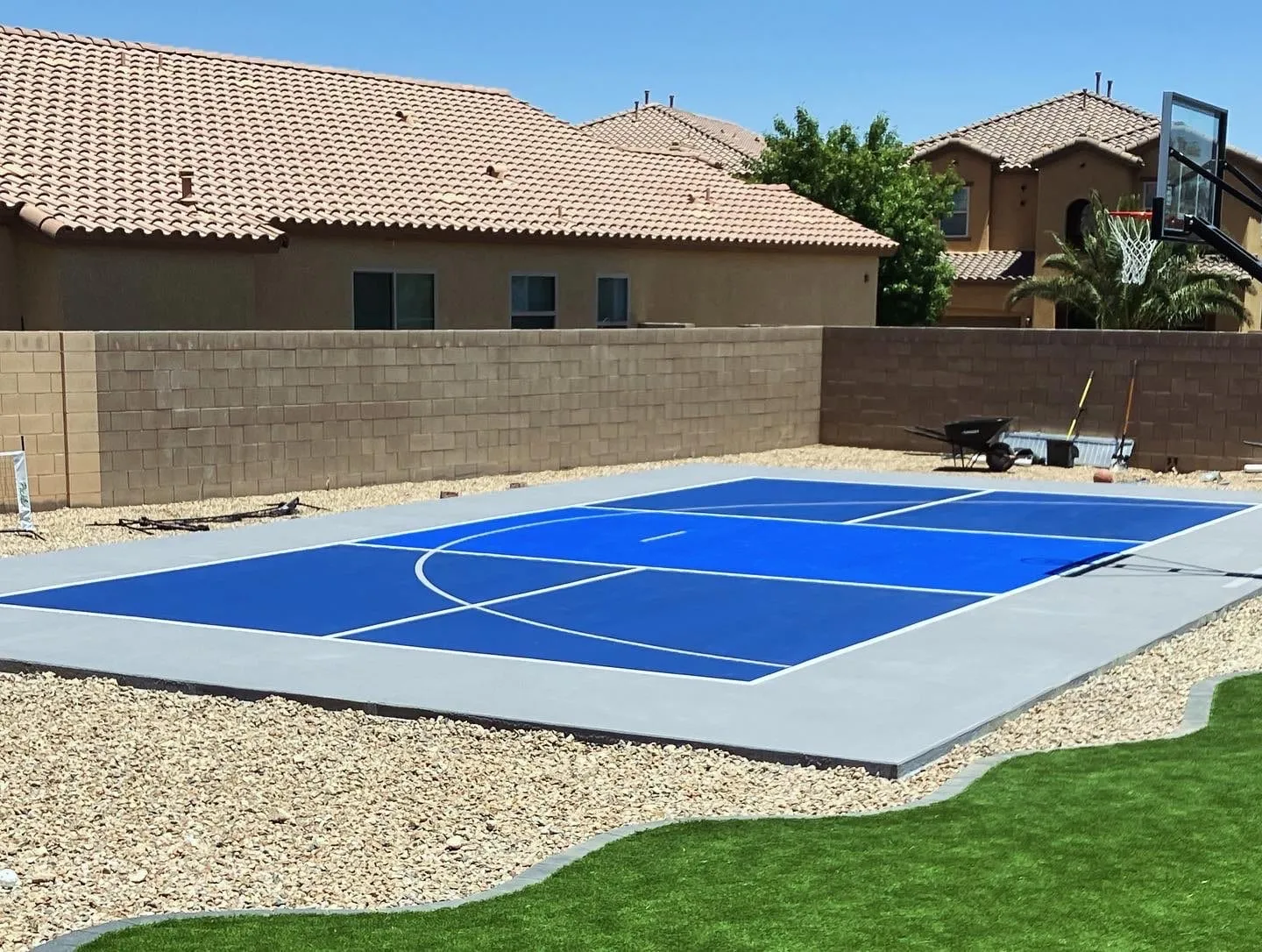
Full and half courts with keys, 3-point arcs, and custom color blocking inside the lines.
Multi-sport
Shared courts carrying two or three sports at once, laid out so the primary sport reads cleanly and the others stay legible.
Futsal and hockey
Perimeter, goal, and penalty markings on hard-court surfaces, usually alongside a basketball layout.
Logos and branding
Painted center-court logos, school and HOA marks, and two-tone color blocking, laid out to scale before anything is painted.
Scoping the work
Striping only, or resurface and stripe
Striping only works when the acrylic coating is still sound: good texture, no peeling, no moving cracks through the playing area. One day of work, and the cheapest way to add a sport to a court you already have.
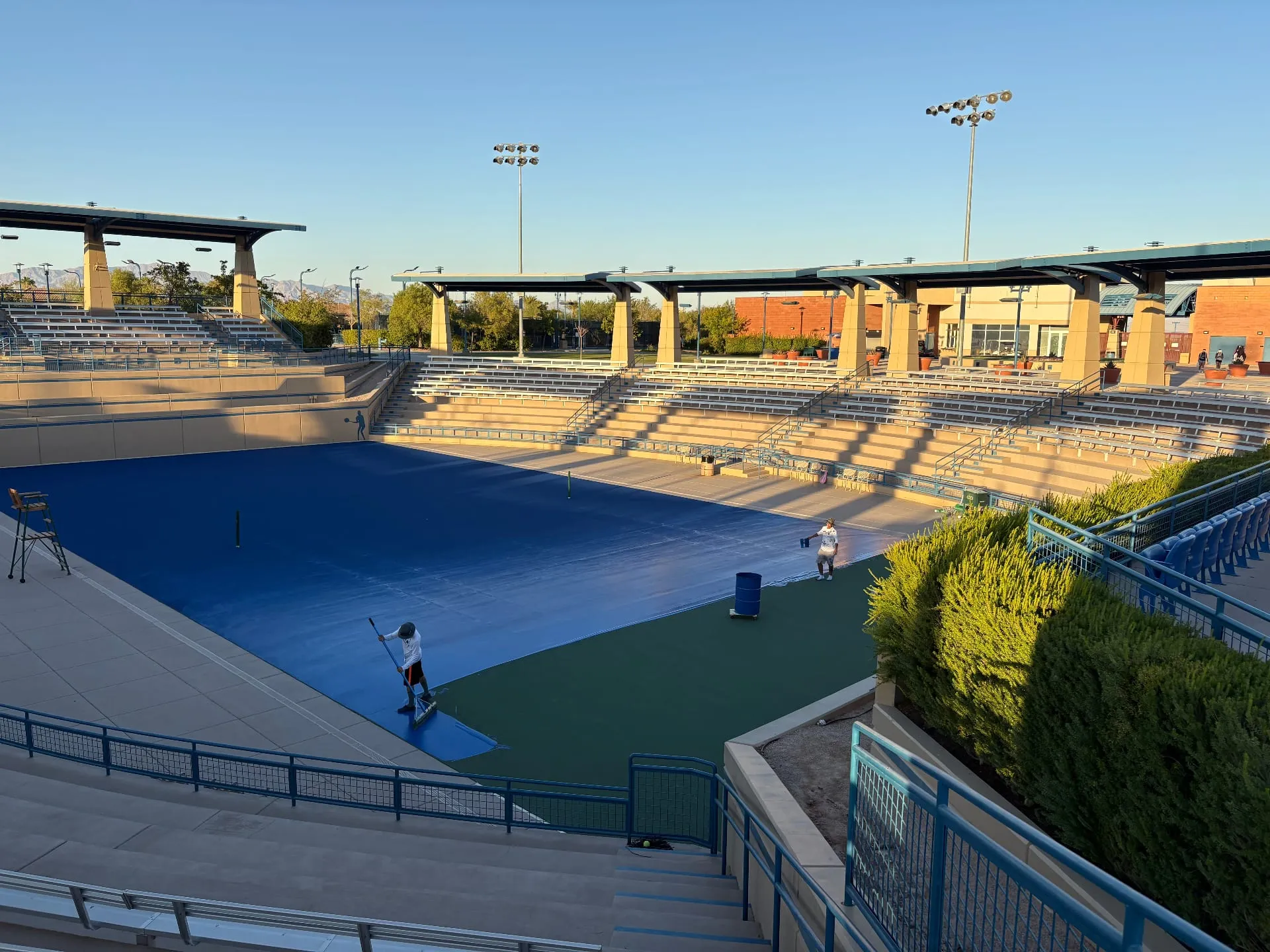
Resurface and stripe is the answer when the coating is worn smooth, chalking, or cracked. New lines are only as durable as what they are painted onto. A full acrylic resurface with fresh striping runs 1 to 2 days in warm weather, and lets you change colors at the same time for no extra coating cost.
If the slab itself is moving, neither option holds. Seepickleball court resurfacing for what a resurface does and does not fix.
What to Expect when you work with On Point Court Surfacing
Striping is usually a one-day visit on a court that does not need resurfacing. Here is what the process looks like from your first call to your first game.
- 1
Request a Quote
Provide information regarding your space and schedule a site visit.
- 2
Design, Price, and Schedule
Choose the best options within your budget for size and materials, then lock it in with a clear contract and a firm price. We pride ourselves on avoiding change orders, so the price you agree to is the price you pay.
- 3
Build
Our team of experts delivers on the vision and builds a premium court that exceeds your expectations.
- 4
Enjoy Your Court
Now is the fun part. Enjoy the court with friends and family, making lasting memories on one of the nicest courts in town.
Frequently Asked Questions
Can you add pickleball lines to my existing tennis court?
Yes, and it is the most common striping job we do. On a tennis court in sound condition we lay out one or two pickleball courts inside the existing footprint and stripe them in blended or contrast lines. If the surface is worn we resurface first, because new lines on a failing coating will fail with it.
What is the difference between blended and contrast lines?
Blended lines are painted a shade or two off the court color, so they read clearly to pickleball players but stay quiet enough that tennis players are not distracted. Contrast lines are a full second color and are much easier to see, which suits courts where pickleball is the primary use. Blended is the usual choice on a shared tennis court.
How long does line striping take?
Striping alone on a court that does not need resurfacing is usually one day, plus cure time before play. Layout and masking take most of that; the paint itself goes on quickly. A resurface with new striping runs 1 to 2 days in warm weather.
Can you stripe over the old lines, or do they have to come off?
It depends on the job. When we are converting a court we sand the old lines down and add an extra coat so they do not ghost through the new surface. Striping straight over old lines without that prep is the reason you see faint tennis lines showing through pickleball courts around the valley.
Do you paint logos and custom color blocking?
Yes. We do painted center-court logos, custom keys, two-tone color blocking, and school or HOA branding, on both new courts and resurfaces. Send us what you have and we will lay it out to scale before anything gets painted.
Are your lines to regulation?
Yes. We stripe to the governing body for the sport: USA Pickleball, USTA, and FIBA or NCAA for basketball. Every dimension is measured and squared on site rather than copied from the lines that were already there, which is how courts drift out of tolerance over successive repaints.
Need lines on your court?
Free written quotes for striping, conversions, and resurfacing across Southern Nevada.