
Tennis Guide
Tennis Court Dimensions: Official Specs and How Much Space You Actually Need
By Brian Foley, Owner · Published
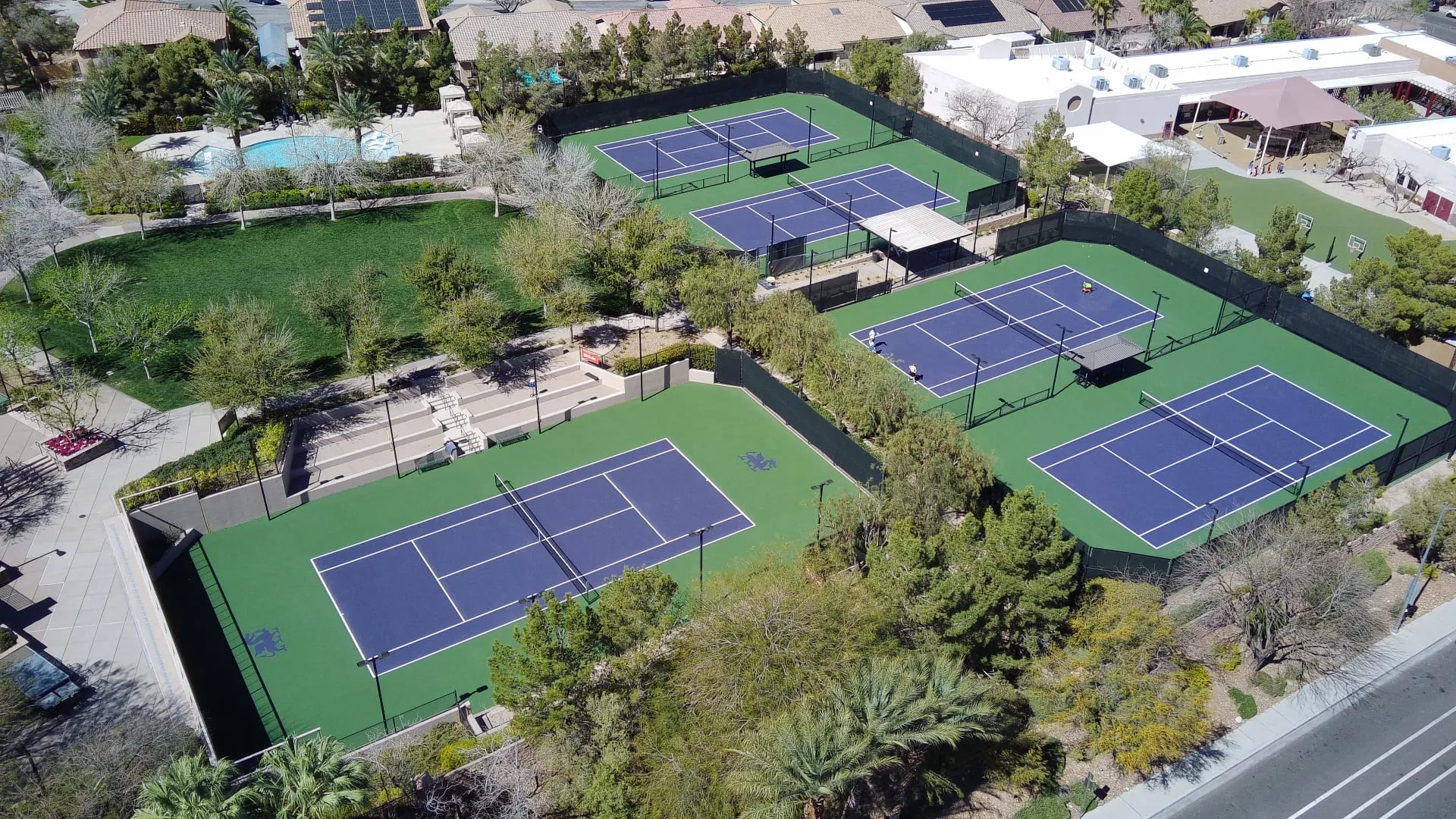
A tennis court is 78 feet long. A singles court is 27 feet wide and a doubles court is 36 feet wide, with the extra width coming from doubles alleys 4.5 feet wide on each side. The service line sits 21 feet from the net, and the tennis net is 3 feet high at the center and 3 feet 6 inches high at the posts.
Those figures come from the International Tennis Federation (ITF), the governing body of the sport. The harder question, and the one that decides whether you can build at all, is how much clear space you need around the playing area. The rulebook gives two answers depending on the level of play, and we lay out both below.
Official Tennis Court Dimensions
| Element | Feet and inches | Metric |
|---|---|---|
| Court length | 78 ft | 23.77 m |
| Singles court width | 27 ft | 8.23 m |
| Doubles court width | 36 ft | 10.97 m |
| Doubles alleys (each side) | 4.5 ft | 1.37 m |
| Service line from net | 21 ft | 6.40 m |
| Baseline to net | 39 ft | 11.89 m |
| Service box | 21 x 13.5 ft | 6.40 x 4.11 m |
| Net height at center | 3 ft | 0.914 m |
| Net height at the posts | 3 ft 6 in | 1.07 m |
| Net post center from doubles sideline | 3 ft | 0.914 m |
| Singles court playing area | 2,106 sq ft | 195.6 sq m |
| Doubles court total playing area | 2,808 sq ft | 260.8 sq m |
Singles and doubles courts share the same court length, and only the total width changes between them. Doubles matches use the outer doubles sidelines and singles matches use the inner ones, which is why one set of court markings serves both.
Service Boxes, Court Lines, and the Center Mark
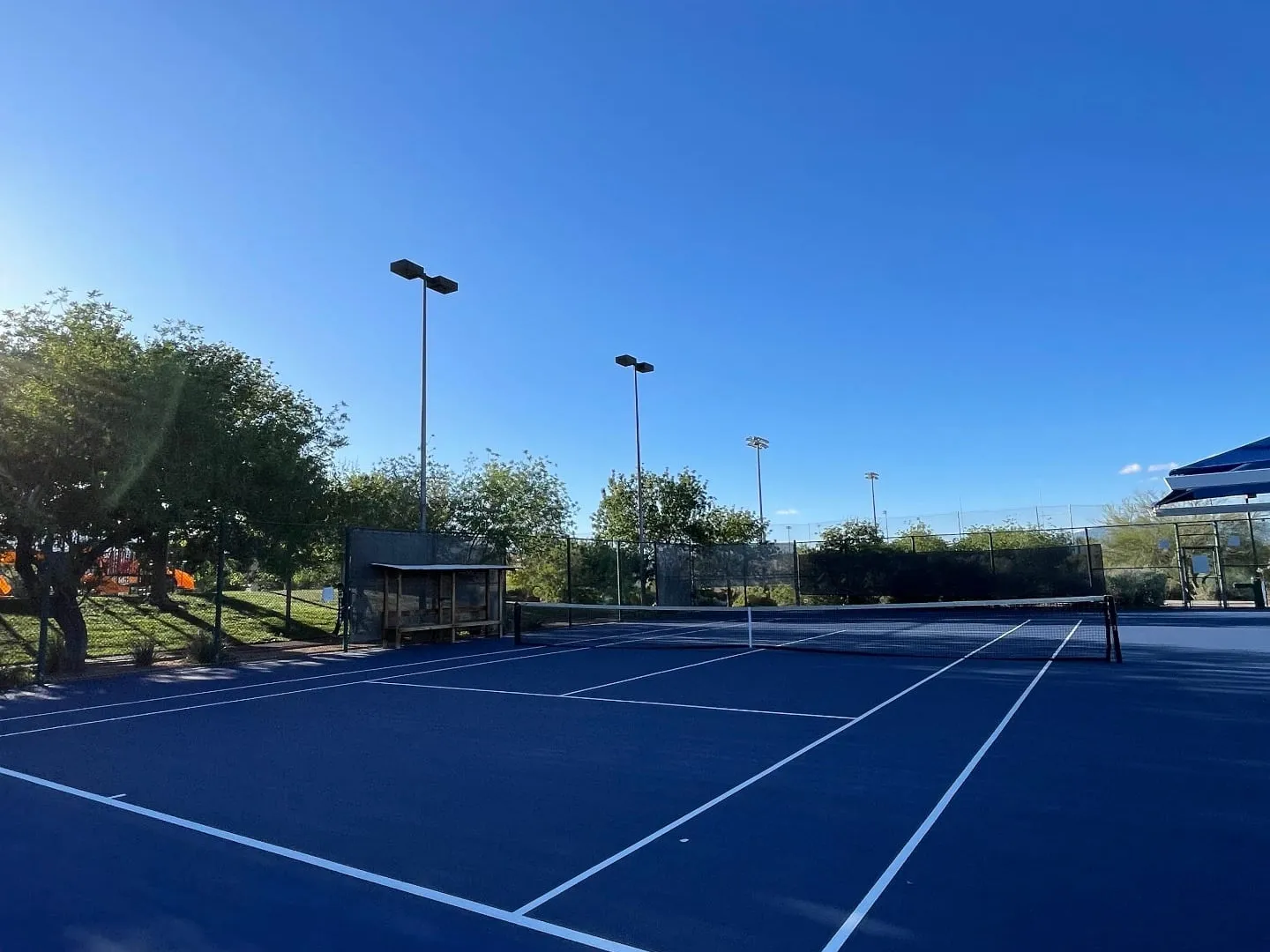
The net divides the court, and each side carries two service boxes formed by the service line and the center service line. The right-hand box is the deuce court; the left is the ad court. A serve into the deuce service box starts every game.
Behind the service line, the strip running back to the baseline is what players call no-man's-land. It has no line of its own and no formal name in the rules, but it is the area that decides positioning.
The ITF is specific about the playing lines. The center service line must be 2 inches wide. Other lines run between 1 and 2 inches, and the baseline may be up to 4 inches. Each baseline is bisected by a center mark 4 inches long and 2 inches wide, drawn inside the court at right angles to the baseline. All lines must be a uniform color.
One detail matters more than any other for a builder: all measurements are made to the outside of the lines. Line width is part of the specification, not a rounding error. A court striped to the wrong edge is dimensionally wrong, and it is the most common flaw we find on courts built by crews who do not stripe for a living.
The Tennis Net
The net runs across the full width, held up by net posts whose centers sit 3 feet outside each doubles sideline. The cord passes over the posts at 3 feet 6 inches, and a center strap pulls the net down until the center measures exactly 36 inches above the playing surface.
That 6-inch drop from post to center is why the middle of the net is the safer target, and why a net strung too loose or too tight changes how the whole court plays.
How Much Space Do You Need for a Tennis Court?
The ITF publishes two sets of run-off guidance, and the right one depends on how the court will be used. Many guides quote only the larger figure. That can make a backyard court look impossible when it isn't.
Appendix X of the ITF Rules of Tennis recommends at least 21 feet (6.40 m) behind each baseline and 12 feet (3.66 m) at each side for international competition. For club and recreational play, the recommended minimum drops to 18 feet (5.48 m) behind each baseline and 10 feet (3.05 m) at the sides.
The competition figures give the familiar 120 by 60 foot footprint, and that is what we recommend when the lot allows it. For a private or club court, though, the ITF minimum is 114 by 56 feet.
| Standard | Behind each baseline | Each side | Total footprint |
|---|---|---|---|
| ITF minimum, club and recreational | 18 ft | 10 ft | 114 x 56 ft |
| ITF recommended, international competition | 21 ft | 12 ft | 120 x 60 ft (7,200 sq ft) |
| Tournament and stadium courts | Often more, per event | More | Varies |
Show courts at professional events often go well beyond these minimums.
A clear rectangle of 120 by 60 feet gives you a full court with the recommended run-off. At 114 by 56 feet, you can still build to the ITF club minimum. With less room than that, players start pulling up on deep balls instead of chasing them. Settle this before any concrete is poured.
Measure the lot, then take off property line setbacks, easements, and any structures, trees, or utilities that are staying. The buildable rectangle is almost always smaller than the lot.
Surface Types and How They Change Play
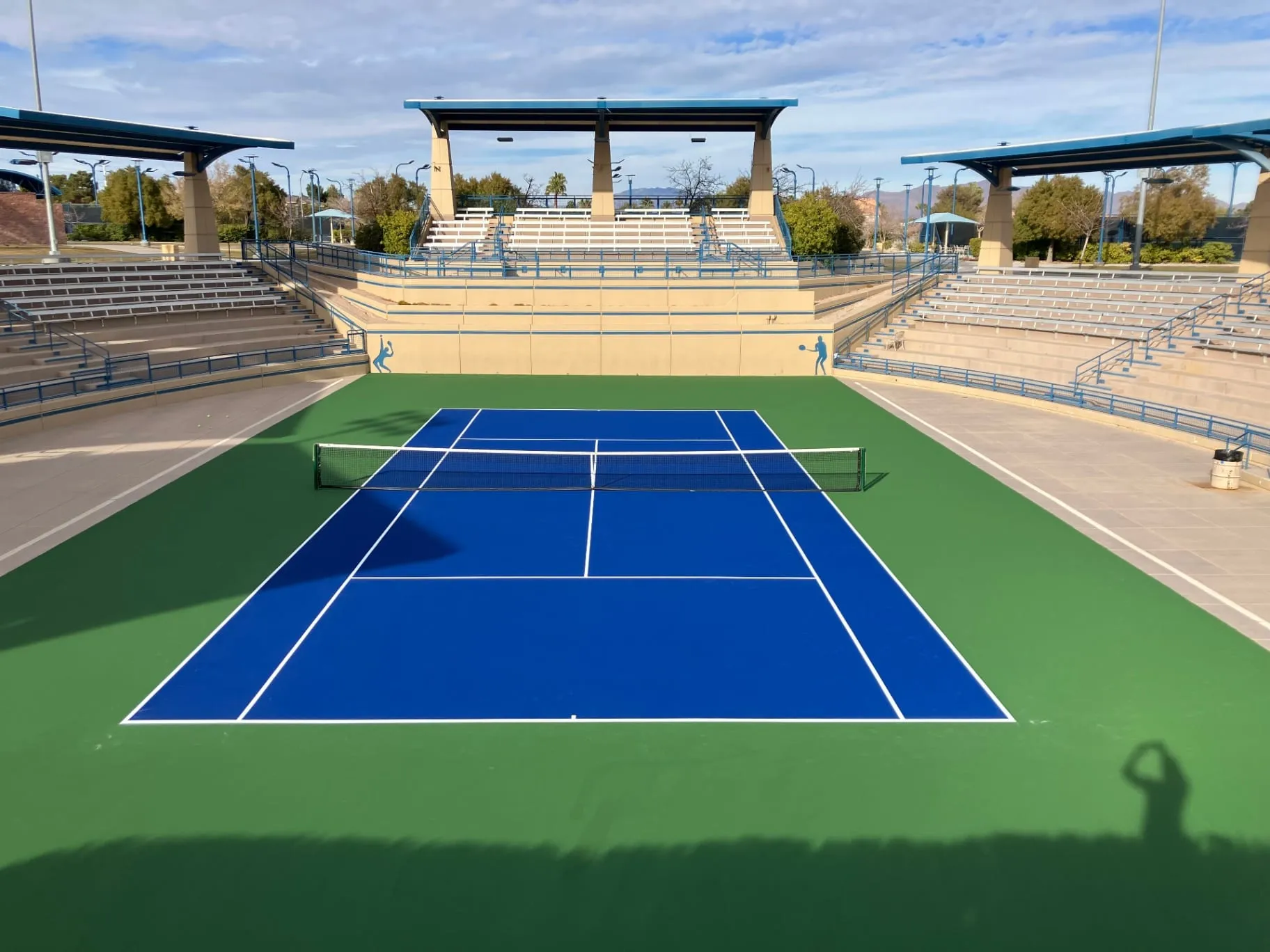
Tennis is played on three main surface types, and each produces different ball behavior.
Hard courts give a consistent bounce and a medium-to-fast pace. They are the most common surface in the United States and the standard across tennis facilities here.
Clay courts slow the ball down and produce a high bounce, which rewards patient baseline play. They also carry the heaviest maintenance requirements of any surface.
Grass courts are the fastest and lowest bouncing, and they need regular maintenance that puts them out of reach for almost every private owner.
In Southern Nevada, hard courts are the practical choice. Clay needs constant watering and rolling, and grass needs even more of both, which rules both out under local water restrictions. Every serious court in the valley is a hard court. We build two systems: acrylic hard court and cushioned acrylic. Our guide to court surfaces in Las Vegas compares them in full.
Building a Tennis Court in Las Vegas
Court dimensions are the same everywhere. What it takes to hold them varies enormously by site.
Orientation
Run the long axis north to south. In the Las Vegas valley, a court laid out east to west puts the late afternoon sun directly in a server's eyes for much of the year. Orientation also constrains where the rectangle can sit, so check it before you assume the square footage works.
Soil and the Slab
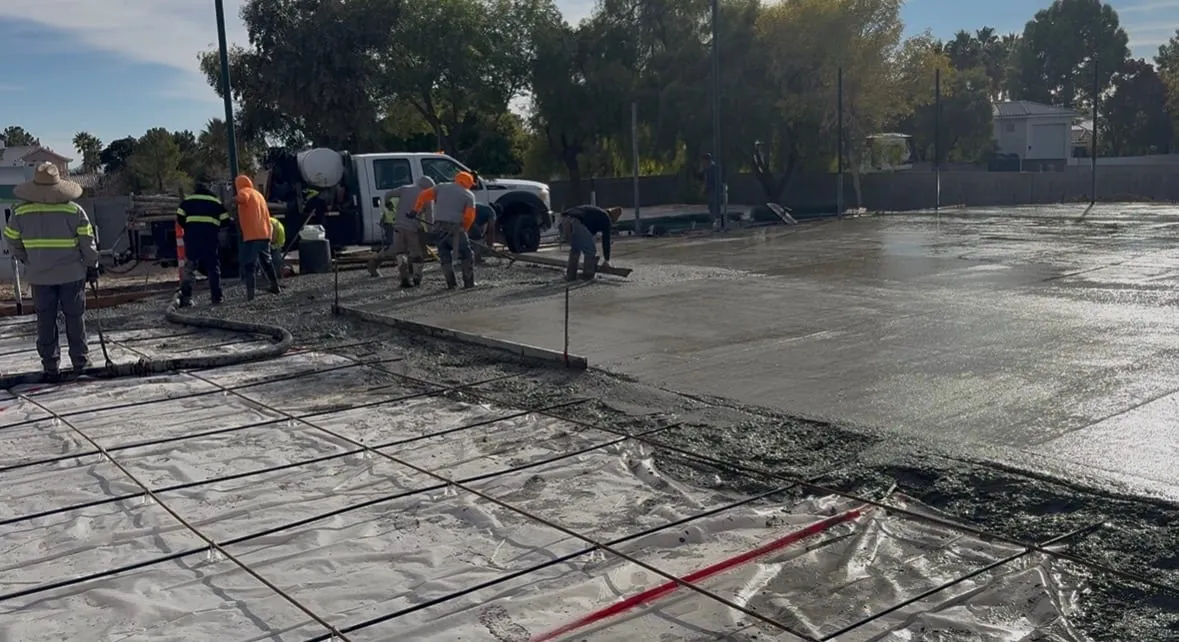
Caliche and expansive desert soils move, and a slab that moves cracks the surface above it. We build post-tensioned slabs, and our concrete lead has decades of experience with them, much of it on courts. A court can hold correct dimensions and still play badly if the slab is out of plane, so planarity and drainage slope matter as much as the tape measure.
Heat, Wind, and Lighting
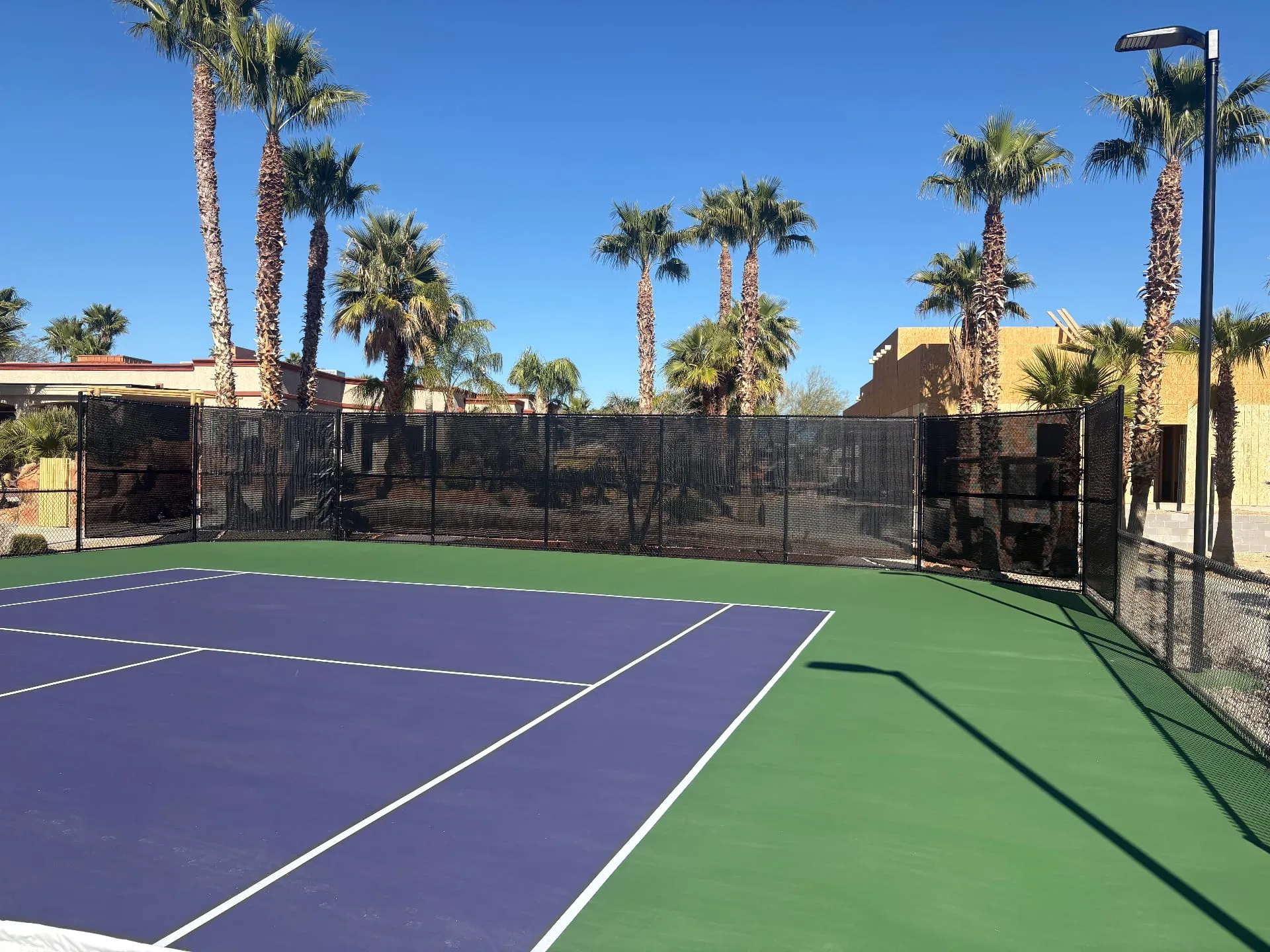
Summers past 110 degrees fade cheap coatings and push play to early morning and after dark, which is why LED lighting is standard on private courts here. Wind is the other constant, so fencing height and windscreen selection belong in the design from the start. Note that fencing sits inside your total footprint.
Permits and Approvals
Confirm property line setbacks, fence height limits, and lighting rules with Clark County, the City of Las Vegas, or Henderson before you design a layout, and expect HOA architectural review on top. Communities in Henderson scrutinize lighting spill and fence height closely.
Adding Pickleball or Junior Lines
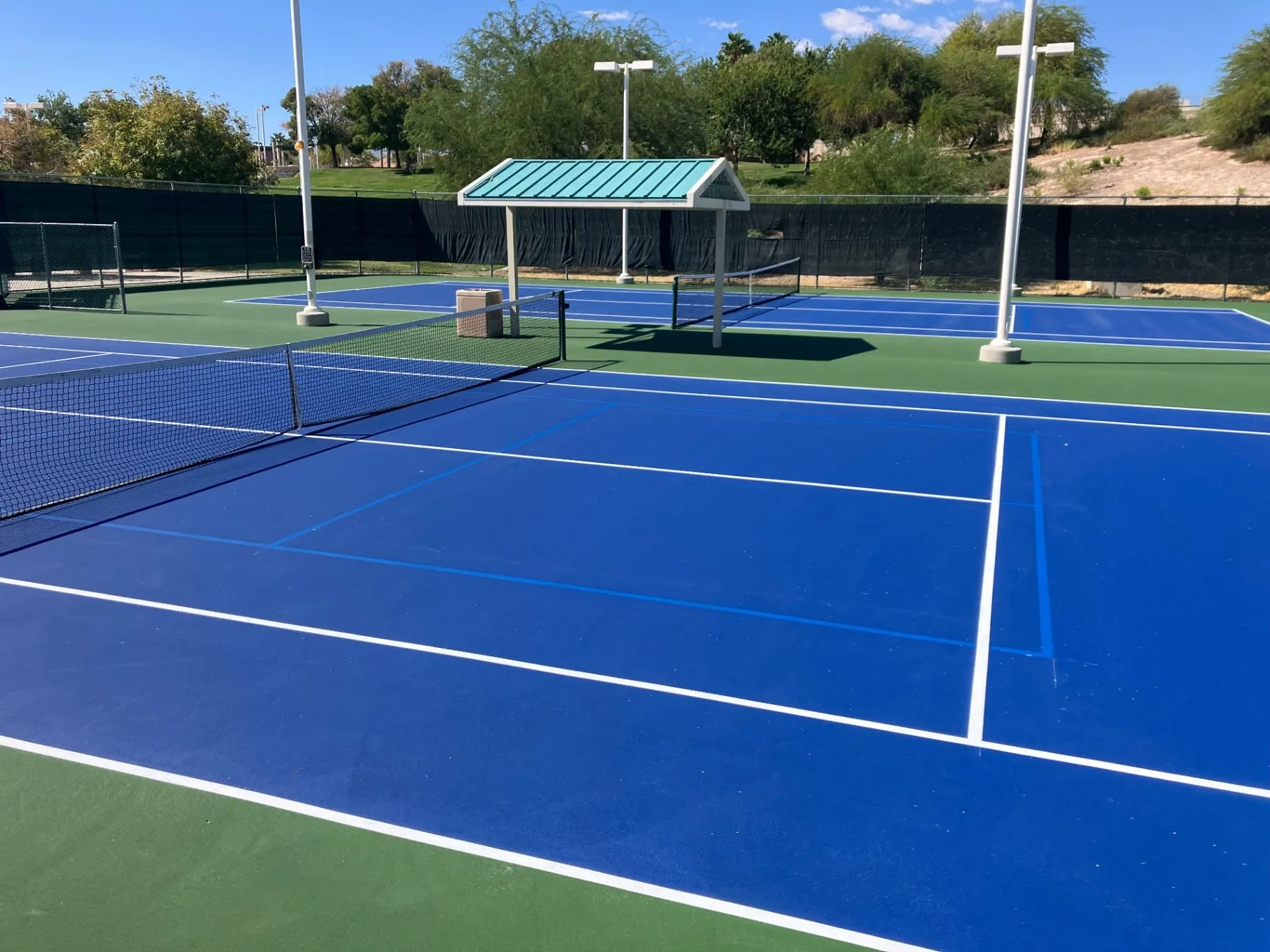
A full-size court has enough space to carry more than one game. Blended lines for 10-and-under tennis use 36-foot and 60-foot courts inside the standard court markings, sized to a young player's skill level.
Pickleball is the more common request. A tennis court footprint accommodates multiple pickleball courts, and adding lines to an existing court is a striping job. If that is what you are weighing, start with pickleball court dimensions and then look at what a pickleball court costs.
Quick Answers
How Much Space Is Needed for a Tennis Court?
The ITF recommends 120 by 60 feet (7,200 sq ft) for competition courts. For club and recreational courts, the minimum is 114 by 56 feet.
Is a Singles Court Smaller Than a Doubles Court?
Only in width. Both are 78 feet long. A singles court is 27 feet wide, a doubles court is 36 feet, and the difference is the two doubles alleys at 4.5 feet each.
How High Is a Tennis Net?
3 feet at the center and 3 feet 6 inches high at the posts, with a center strap holding the middle down to exactly 36 inches.
Can a Tennis Court Fit in a Backyard?
With a clear, level rectangle of 114 by 56 feet after setbacks, yes. Below that, you can build with reduced run-off, but you give up safe movement behind the baseline, so it is worth a site visit before ruling it in or out.
Get Your Site Measured
On Point Court Surfacing builds and resurfaces courts across the Las Vegas valley, holding Nevada contractor licenses for surfacing and fencing (#0090686) and concrete (#0095035), with ASBA membership behind the work. Our work includes Darling Tennis Center, TPC Summerlin, Dragon Ridge Country Club, Anthem Country Club, and a 10-court resurface at Lorenzi Tennis Club.
Owner Brian Foley played number one singles on a full scholarship at Boise State. "I played on courts with plenty of room behind the baseline and courts without it, and you play differently on the tight ones. You stop chasing. That's why we push for the full 21 feet when a lot can take it, and we'll tell you straight when it can't."
We will measure your site and tell you honestly whether a full court fits. Call (702) 686-7738 or see our tennis court construction page.