
Tennis Guide
Tennis Court Crack Repair in Las Vegas: Cosmetic, Structural, and When Coating Will Not Fix It
By Brian Foley, Owner · Published
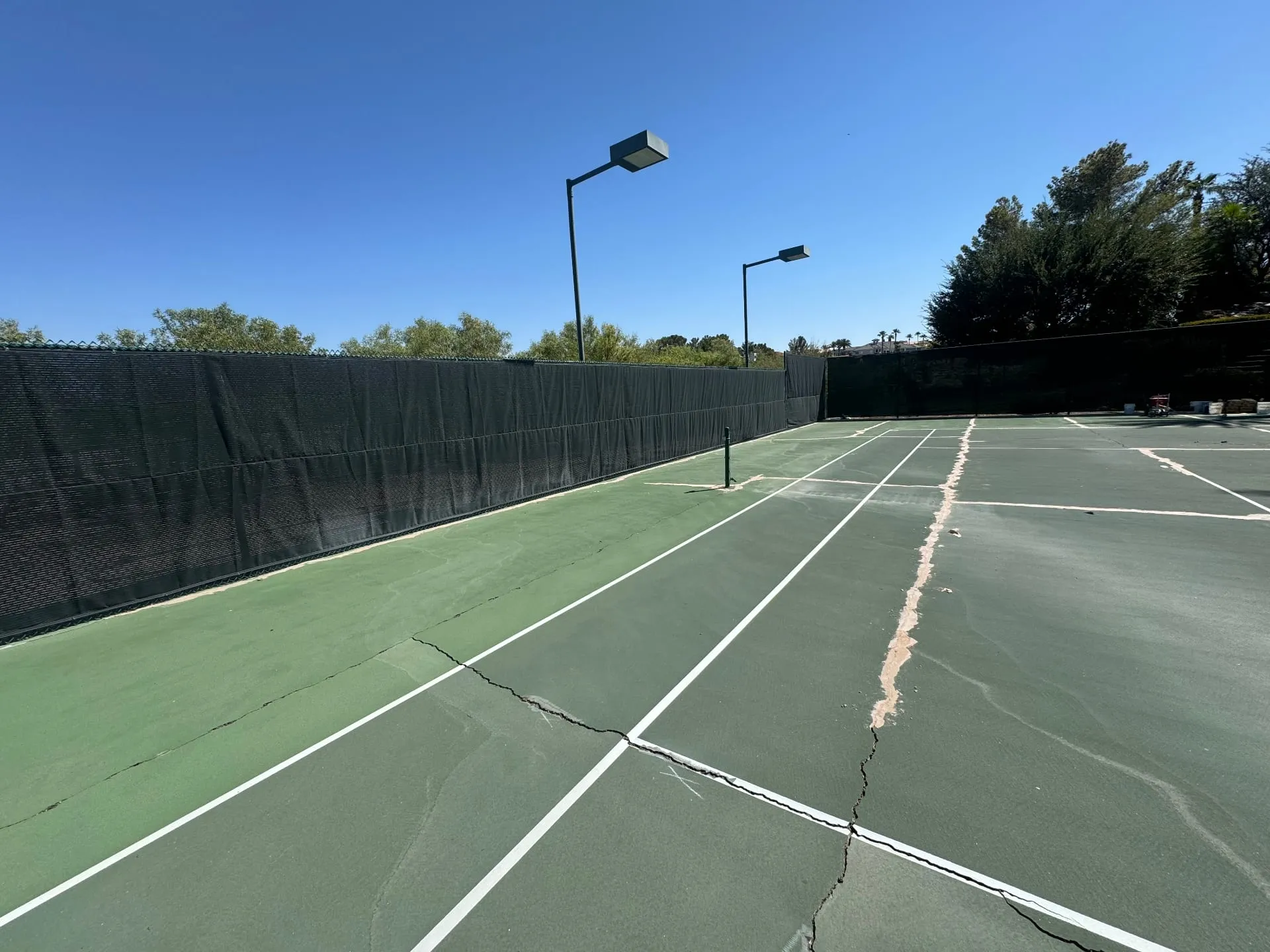
By midsummer in Las Vegas, a thin dark line shows up on a court that looked clean in spring. A crack you can catch a fingernail on, or one that runs straight across the court, points to the slab beneath the paint. Fine webs of crazing in the coating are cosmetic, and we fill and blend them under a fresh coat. A crack that keeps widening or leaves a lip at the joint needs a different fix.
Owners see a line in the coating and reach for filler, but the line comes from the slab. Tennis court crack repair only lasts once the ground under the court stops shifting.
Is Your Tennis Court Crack Cosmetic or Structural?
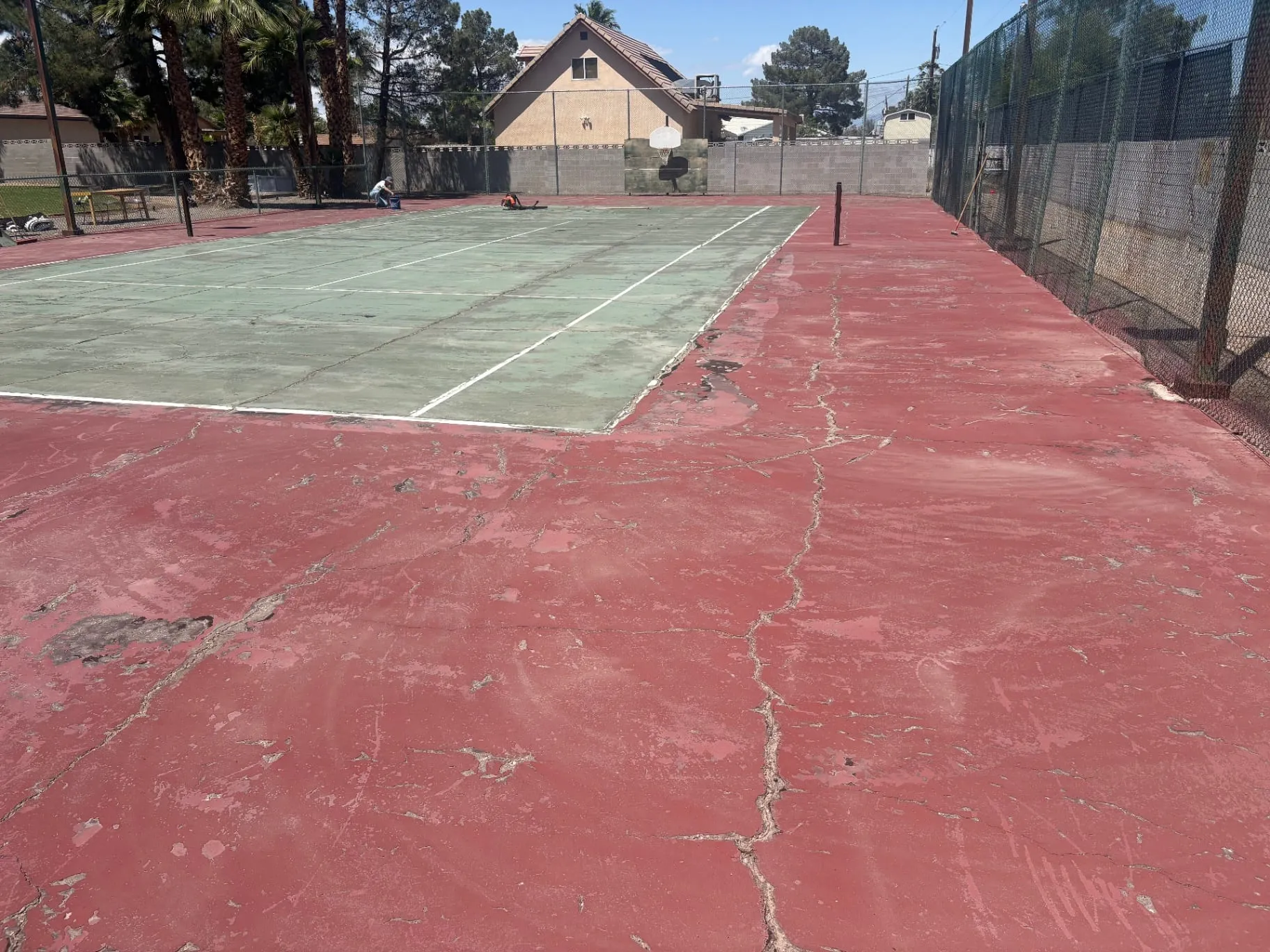
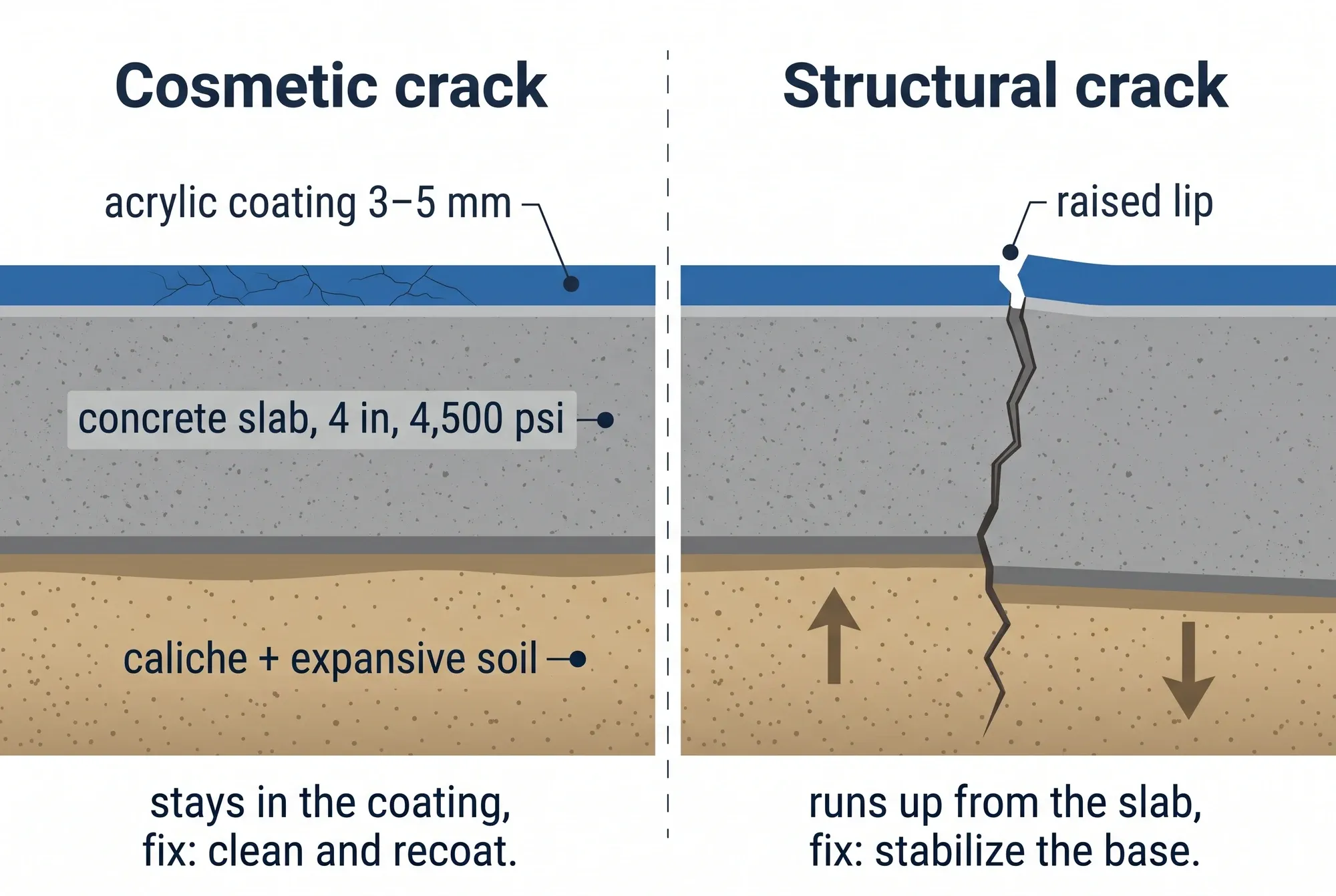
On a damaged tennis court, what causes the crack decides the fix. A cosmetic crack lives in the coating, while a structural crack lives in the slab. Crazing, a web of fine hairline cracks in the acrylic surface, is cosmetic and repairable. Cracks with a felt edge, or ones that run straight across the court, come from the concrete below.
Drag a fingernail across the crack on a cool morning. If it catches, you can feel the problem before you can see it. That catch separates a cosmetic patch from a structural fix, since fixing structural cracks in a tennis court starts with the slab.
| Crack type | What it looks like | What causes it | What fixes it |
|---|---|---|---|
| Crazing | A web of fine cracks in the color coat, smooth to the touch | UV and heat wear on the acrylic | Cleaning and a fresh coat |
| Hairline crack | A thin visible line with no catchable edge | Expansion and contraction in a worn coating | Routing and filling, then feathering and recoating |
| Static crack | A crack with a felt edge that has stopped growing | A past settlement that has since stabilized | Filling and recoating once we confirm it has stopped |
| Moving crack | A straight line across the court, sometimes with a lip at the joint | Soil movement under the slab or a failing base | Slab repair or a rebuild |
How to Repair Cosmetic Tennis Court Cracks
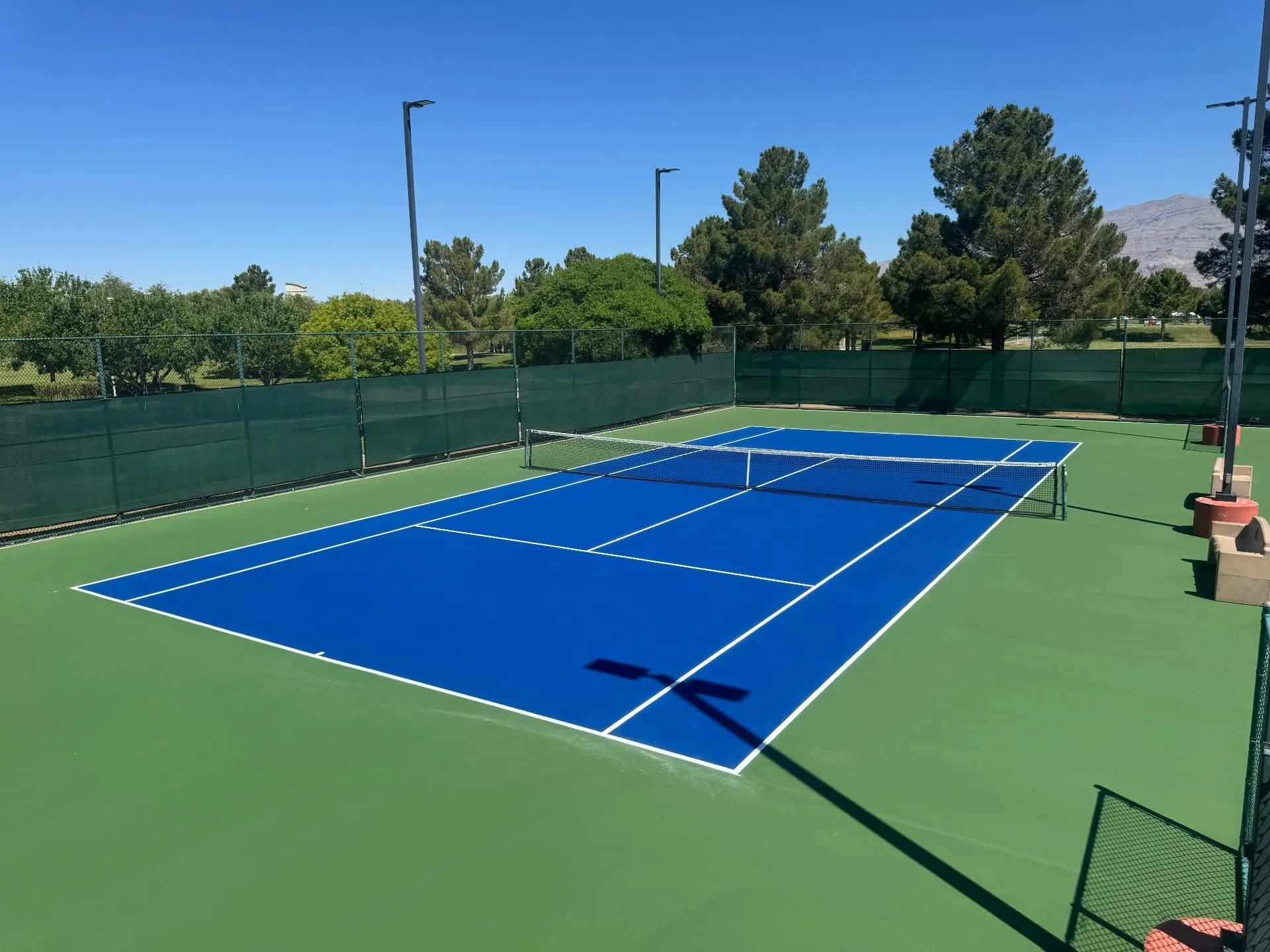
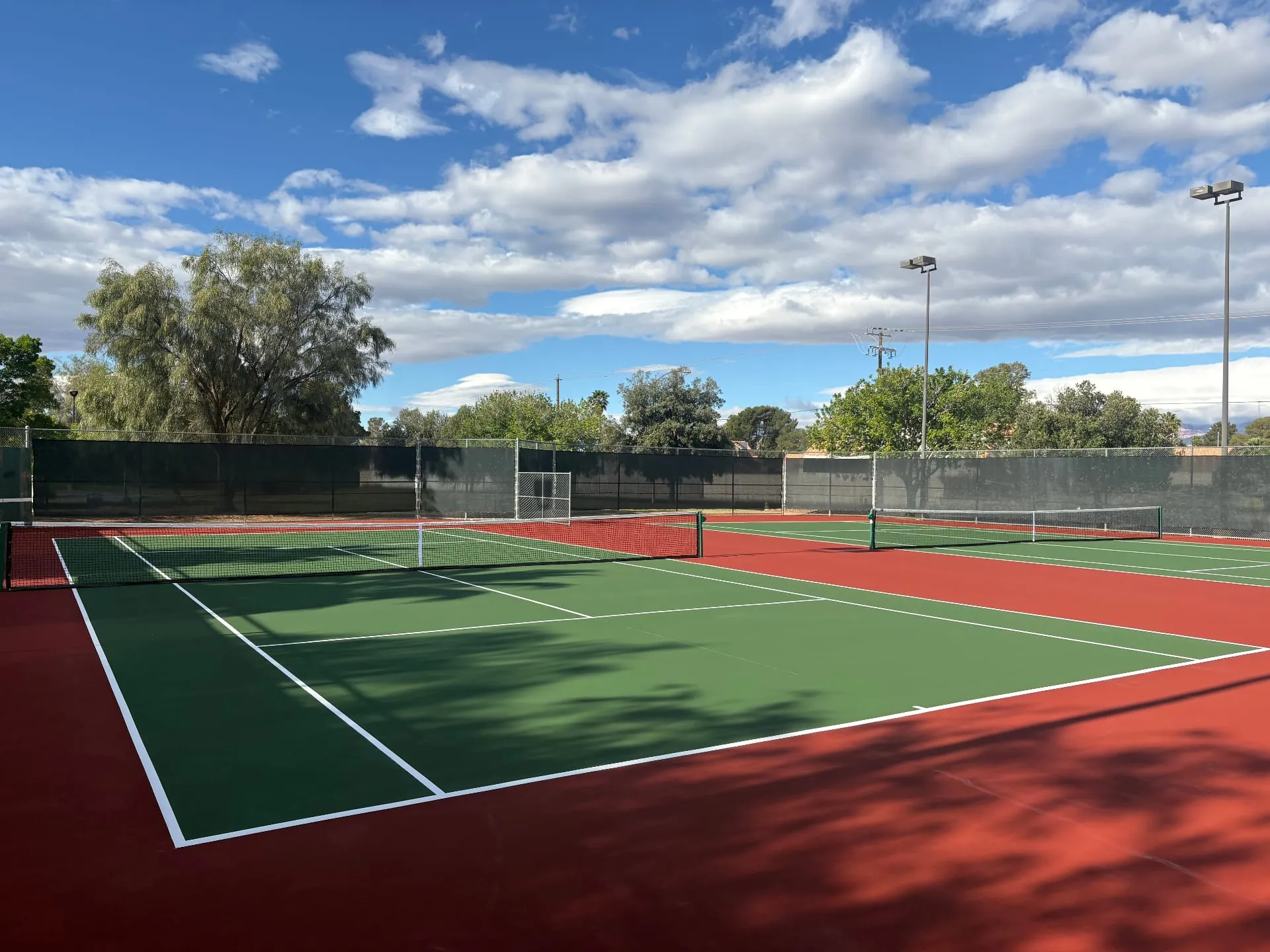
Fixing tennis court cracks that are only cosmetic follows a set routine. Hairline and minor cracks get routed first, which means opening each one slightly so the filler has clean edges to grip. After the flexible acrylic-based filler goes in, we feather the edges flat and blend the area under a fresh color coat, an acrylic crack repair that holds as long as the slab underneath stays put.
We have used this process for tennis court crack repair on HOA courts and on a North Las Vegas court. Both jobs ended with a resurfacing, and the HOA courts got a full two-tone finish. If the whole coating is worn, resurfacing the entire playing area evens out the color. Ask for that quote when you book your site visit.
Can You Use Tennis Court Crack Filler Yourself?
A homeowner can fill a hairline crack, but a hardware-store tennis court crack filler shrinks in desert heat, and an acrylic crack filler or tennis court crack sealant made for driveways fails the same way under extreme temperature swings. Proper tennis court repair calls for a router and for surface prep that clears every bit of dirt and debris.
It looks easy in a video, and a little filler looks fine at first. The coating is only 3 to 5 millimeters thick and cannot span concrete that is still shifting. Whether you use filler or a tennis court crack sealer, the crack telegraphs. That means the slab keeps shifting under the new color coat, and the same line works back through within a season or two.
Homeowners who would rather not learn it the hard way call us for home court repair and resurfacing.
Why Do Tennis Courts Crack in Southern Nevada?
Tennis courts here crack because the ground under them moves. Caliche is a desert soil that calcium has cemented solid, and its thickness and hardness vary across a site. It sits beside expansive soil that swells and shrinks with moisture, so one court can sit over soil that moves at very different rates.
A slab can hold firm on caliche while another part settles on softer soil, which engineers call differential settlement. A 2007 University of Nevada, Las Vegas conference abstract says caliche harms structures indirectly when a foundation rests partly on caliche and partly on compressible soil.
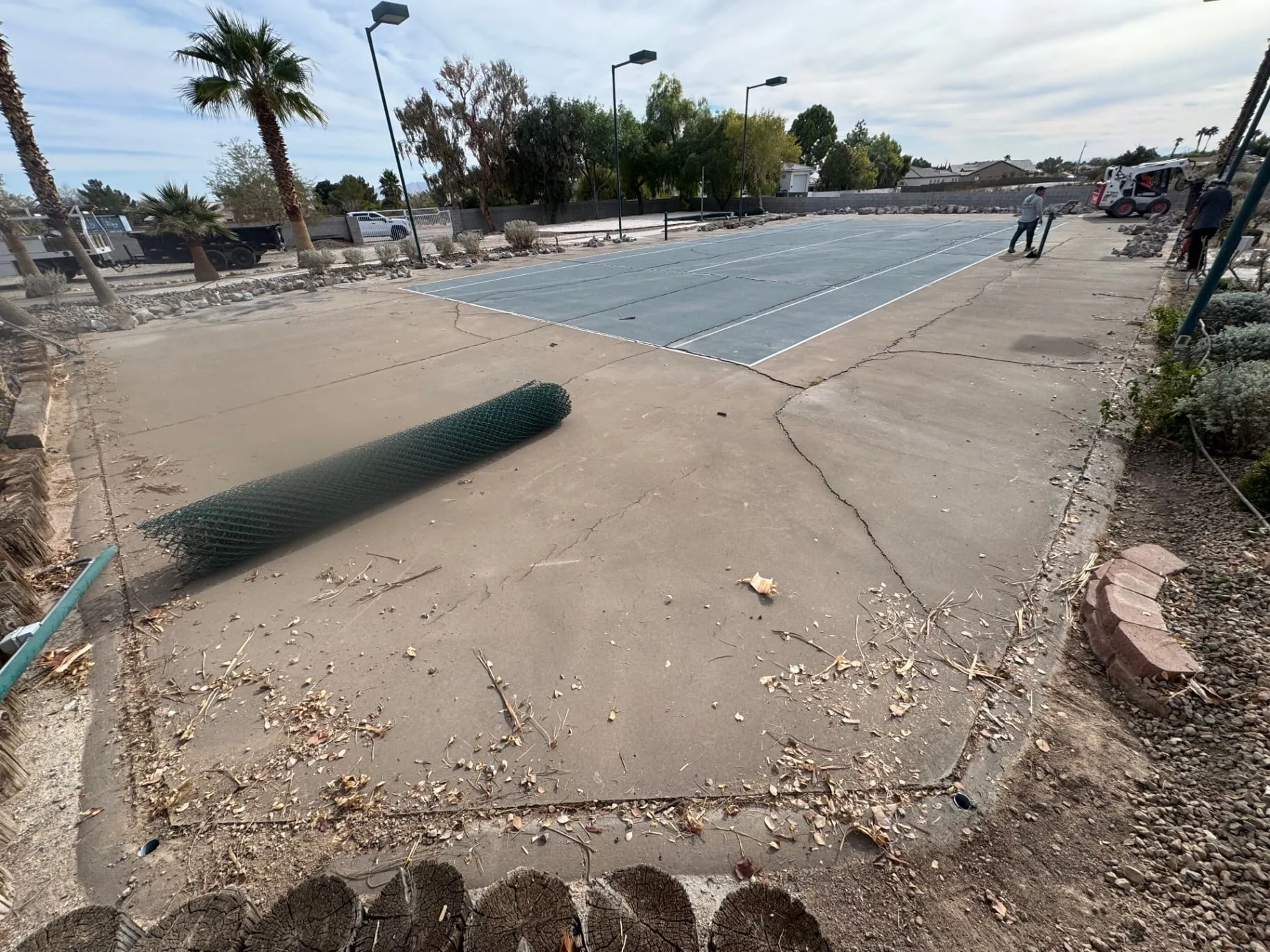
A 60-by-120-foot court has more joint length and edge than a smaller court, which gives the base more places to shift. We resurface pickleball courts too, and pickleball court crack repair starts with the same cosmetic-or-structural question, since a hairline in the coating and a moving joint call for different fixes.
A June 2026 Southern Nevada Health District page says the National Weather Service ranked 2025 as the fifth-warmest year on record for Las Vegas, with 77 days at 100 degrees or higher. That heat expands slabs and coatings, and every cooldown contracts them, which works on every joint and crack.
Will the Crack Come Back After Resurfacing?
It depends entirely on the slab. Over a base that has settled and stayed put, a resurface can hold for years. Over one that is still moving, the same line can reopen the next day or hold for a couple of years before it works back through the fresh coating, because new color does nothing to stabilize the concrete beneath it.
New coating also leaves two related problems untouched. Standing water from bad grading collects in low spots called birdbaths, and a lip at a settled joint stays a lip. The raised edge catches a toe mid-stride, which is how people turn an ankle on a resurfaced court.
A quick check each season keeps small cracks small, and our advice on keeping a tennis court in shape year-round shows what to look for.
What We Check on a Site Visit
We start by looking at the crack and the ground around it to tell whether the problem sits in the coating or in the slab, which is the line between a simple tennis court surface repair and a slab fix. When you compare contractors, ask for a Nevada license number and proof of insurance. Clubs and HOAs with several courts can book tennis court repair and resurfacing for a whole facility.
⭐⭐⭐⭐⭐
"We had our tennis court resurfaced. Brian and the team are the best. Very responsive, went over all of our options and answered all our questions. Showed up when they said they would and completed the work on time. Would highly recommend."
Is a Crack a Reason to Rebuild the Court?
A single crack over a stable slab rarely calls for a rebuild. A rebuild earns its cost only when the base itself keeps failing, since that is the one problem filling and resurfacing can never outlast. Spot repair costs a fraction of what a full resurfacing runs, and a new tennis court build runs $105,000 to $165,000.
A full resurface fits a court with widespread coating wear over a base that has gone stable.
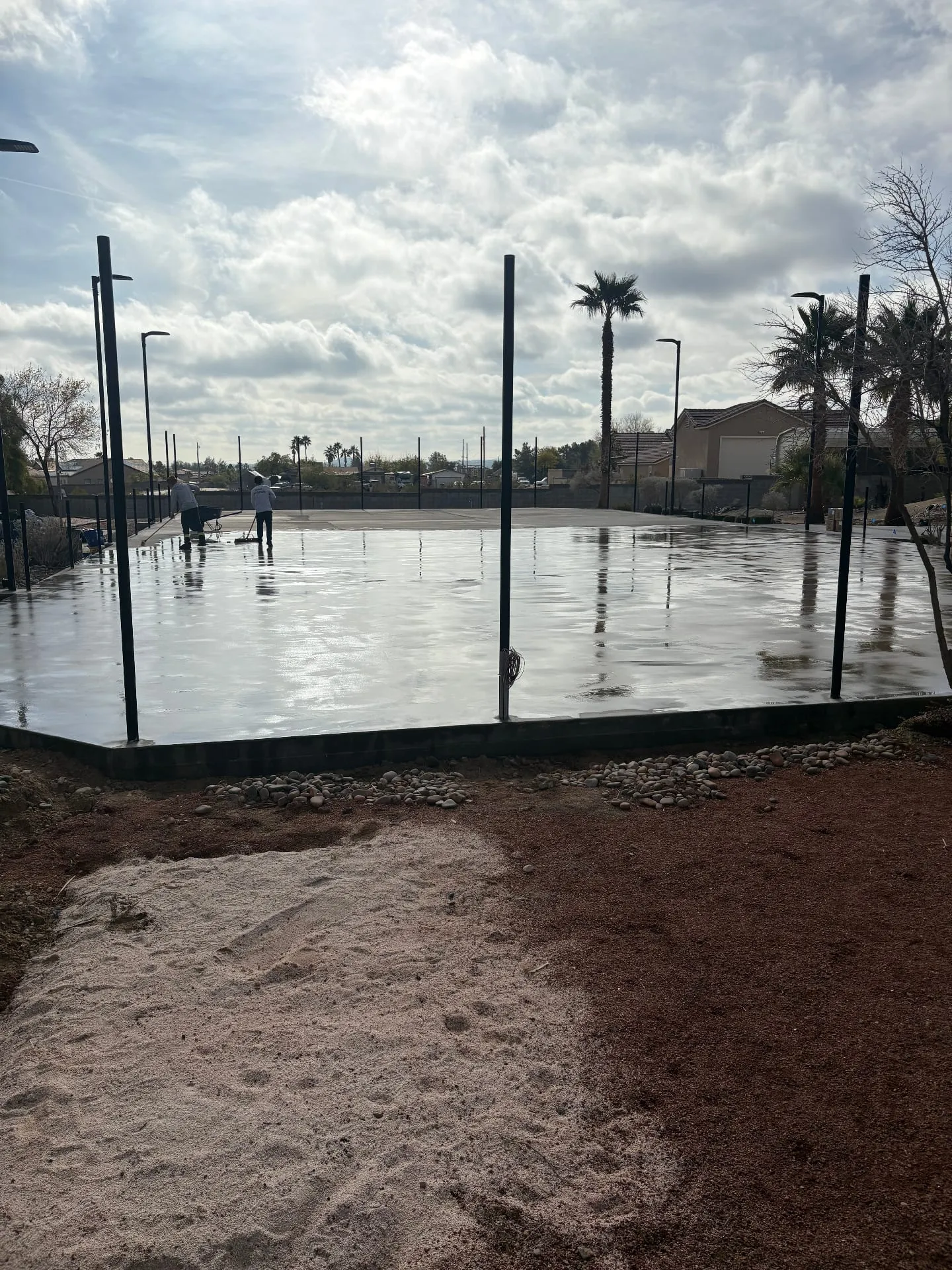
Holding both a surfacing license and a concrete license means the crew that diagnoses your court is the crew that fixes it. We pour the concrete in-house under Nevada license 0095035. Our concrete lead has more than 30 years of experience with post-tension court slabs, which are poured around steel cables that get pulled tight once the concrete hardens. A rebuild uses at least 4 inches of concrete rated at 4,500 pounds per square inch, with permitting and, for HOA courts, board approval.
Book a Free Site Visit
If you have found a crack, call us at (702) 686-7738 to book a free site visit. We will tell you whether a repair will hold or the court needs a rebuild. You can also reach us through our contact page. We serve Las Vegas, Henderson, North Las Vegas, and Boulder City.
Brian Foley owns On Point Court Surfacing and is on site for the work. On Point is a member of the American Sports Builders Association (ASBA) and holds Nevada contractor licenses 0090686 (Surfacing and Fencing) and 0095035 (Concrete).