
Basketball Guide
Basketball Court Installation Cost in Las Vegas (2026 Price Guide)
By Brian Foley, Owner · Published · Updated
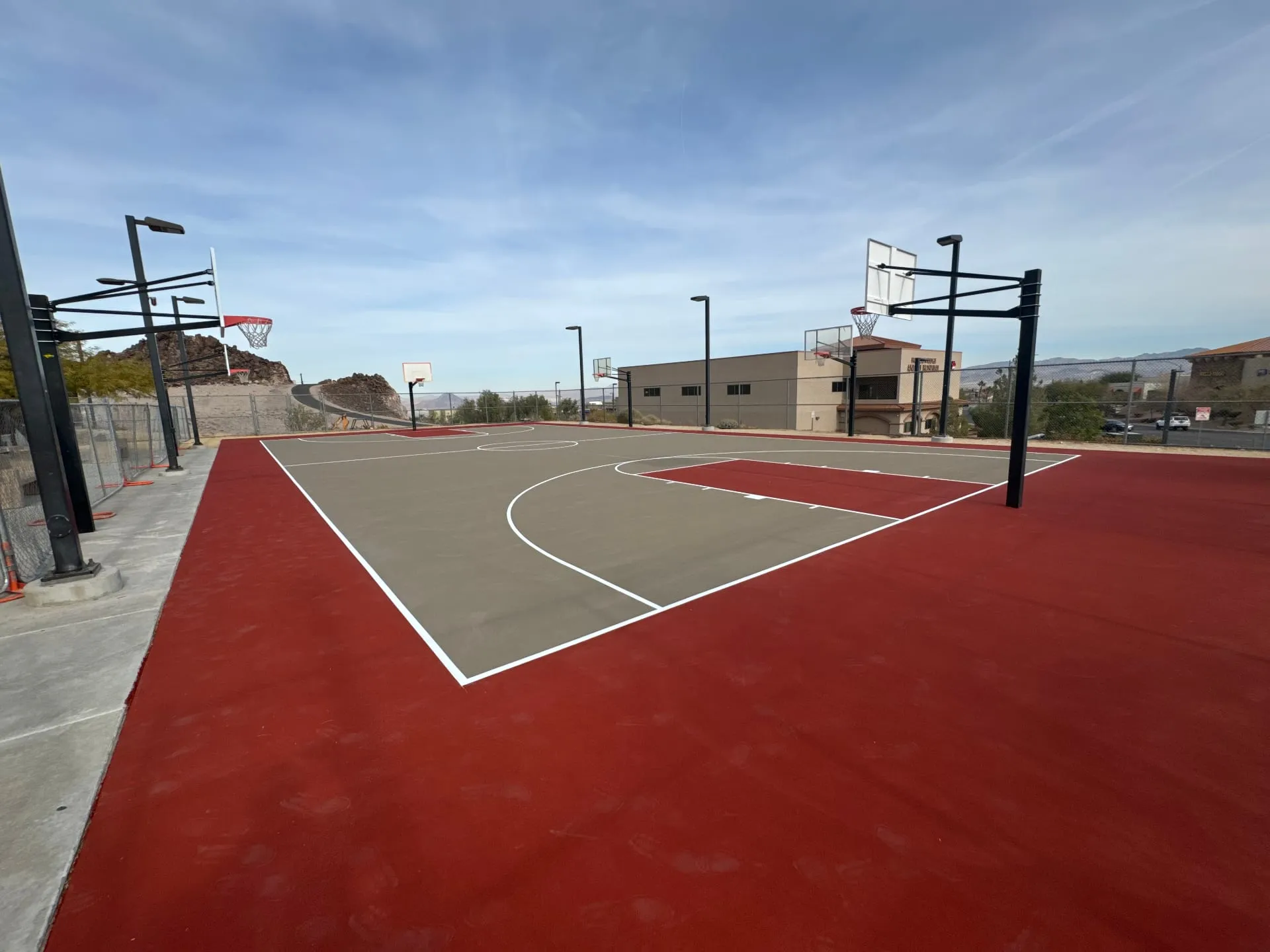
A new half court in Las Vegas starts at $12,000. Larger half courts and ones with added features run $16,000 to $35,000.
A full-size basketball court costs $105,000 to $165,000 to build. Resurfacing an existing outdoor basketball court costs $4,000 to $8,500 for a half court and $6,000 to $15,000 for a full court.
These figures come from our own project pricing in Las Vegas, Henderson, and Summerlin.
| Court Size | New Build | Resurface |
|---|---|---|
| Half court | From $12,000 (larger/featured: $16,000 to $35,000) | $4,000 to $8,500 |
| Full-size court | $105,000 to $165,000 | $6,000 to $15,000 |
Prices reflect On Point Court Surfacing projects in the Las Vegas area. Your quote depends on site conditions, size, and features.
Why Online Prices Look So Much Cheaper
Search for backyard basketball court cost, and you'll find prices quoted from $2,700 to $15,000.
Those numbers come from two kinds of sellers: modular tile companies pricing interlocking tiles laid on a slab you already own, or hoop retailers pricing a small shooting pad. Neither one quotes what it takes to build an outdoor court from bare ground. They read as low-cost quotes because they leave the slab and the site work out.
Our number covers the whole job. It starts with site preparation, grading, and drainage, then moves to the concrete, the acrylic surfacing, and the lines. Most of that cost sits in the concrete. Our court base is post-tension. Steel cables run tensioned inside the concrete so it resists cracking as the ground shifts underneath. On Point holds Nevada licenses for concrete (0095035) and for surfacing and fencing (0090686), so the same licensed crew that pours the base also finishes the court surface, with no subcontractor markup stacked in between.
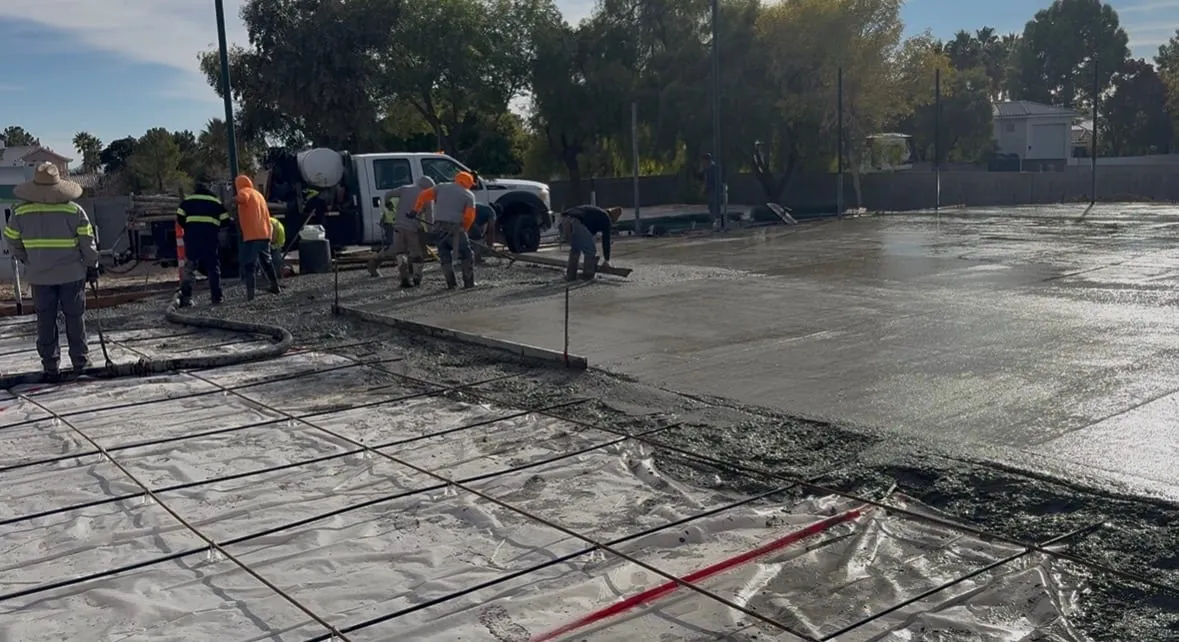
Our standard slab spec calls for at least 4 inches of 4,500 psi concrete over a compacted crushed stone base. Las Vegas soil is the reason that spec exists. A lower quote almost always comes from a thinner slab, plain rebar in place of post-tension cable, or a smaller base, and those shortcuts cost more later when the surface cracks.
How a Half Court Compares to a Full Court
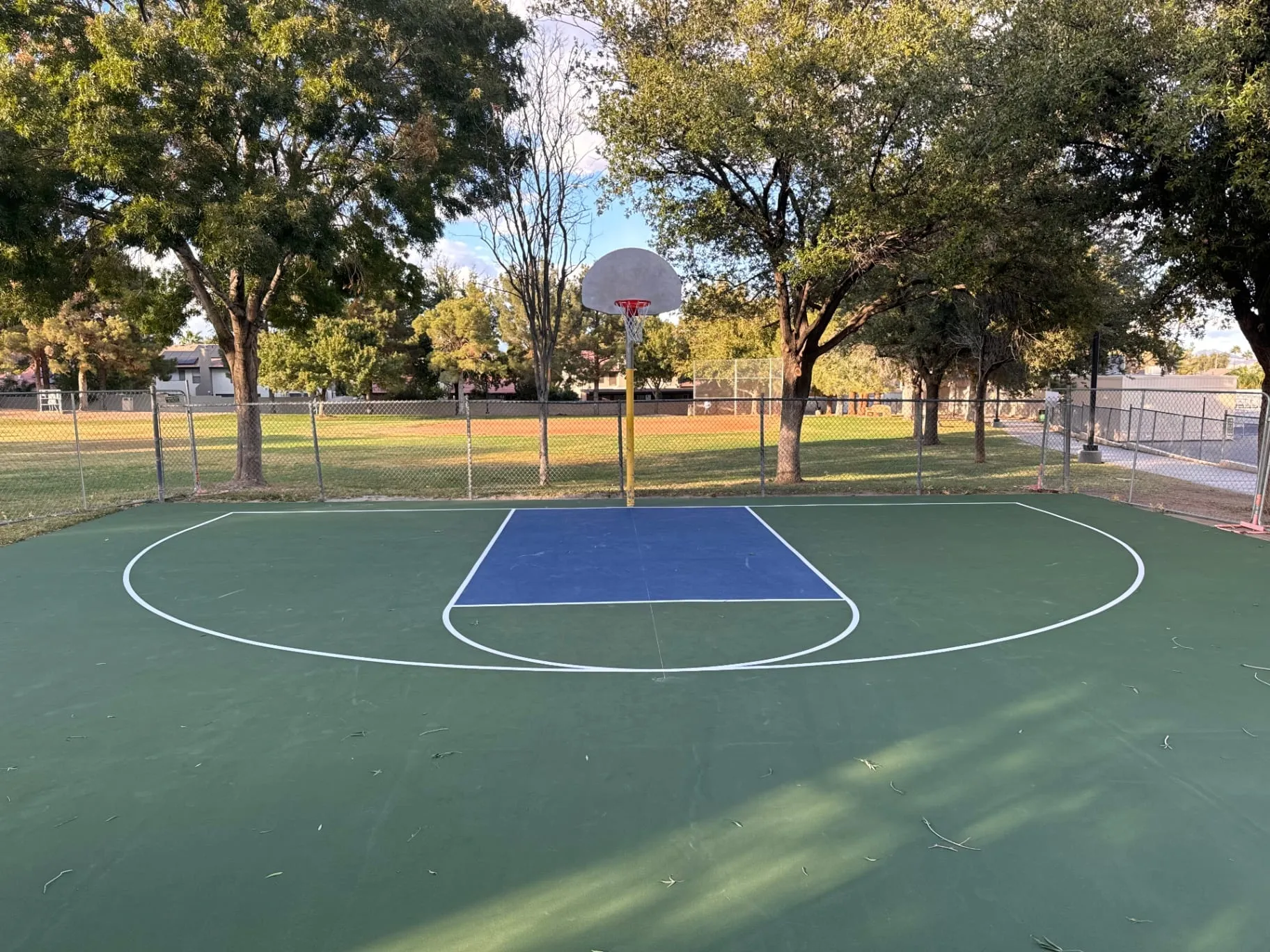
For a straightforward half court, $12,000 is the floor. Size up or add features and the price moves into the $16,000 to $35,000 band, the same territory as a pickleball court.
Half courts can be built small and fit lots where a full court won't. A small one needs less concrete and surfacing than a pickleball court, which is why its starting price comes in below what a pickleball court costs.
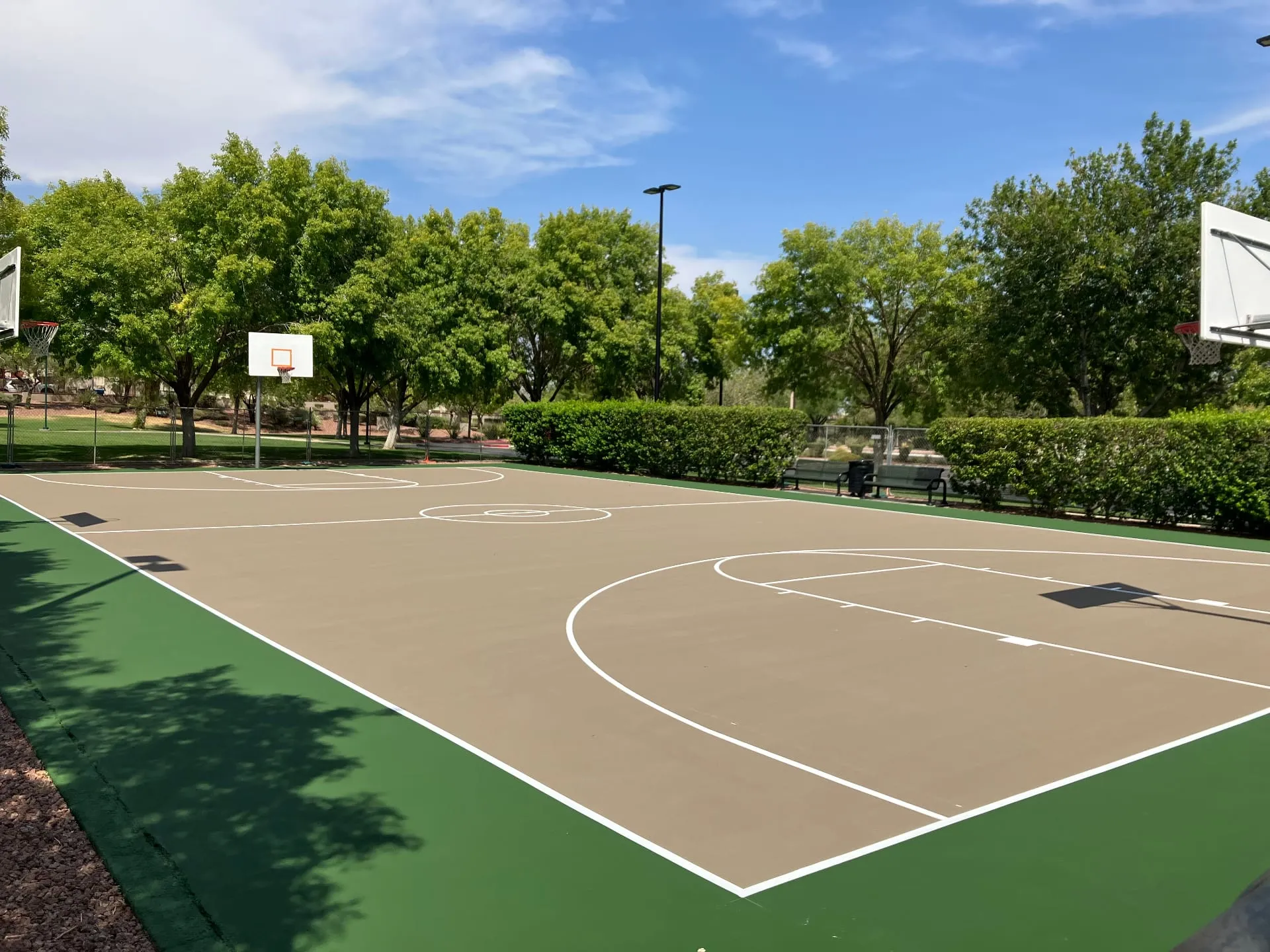
A full-size court runs $105,000 to $165,000, the same range as a full tennis court. Most of the jump is footprint: a backyard half court is usually 30 by 30 or 30 by 50 feet, while a full court is 94 by 50, so you're pouring three to five times the concrete. The rest comes from site work that grows with the pad, including a longer drainage run and more grading across the bigger footprint.
| Court size | Footprint | New Build | Resurface | Best For |
|---|---|---|---|---|
| Half court | Smaller, fits most residential lots | From $12,000 to $35,000 | $4,000 to $8,500 | Backyard shooting, family play, HOA common areas with space limits |
| Full court | Regulation-length, needs more clearance | $105,000 to $165,000 | $6,000 to $15,000 | Schools, parks, HOA amenity courts, and serious training |
What Drives the Price Up or Down
Footprint is where it starts. More square feet of court means more concrete, more surfacing, and more base to compact, so the first thing we settle is the size that fits your lot. If you're still weighing that, our basketball court dimensions guide walks the sizing tiers.
Once size is set, the ground takes over. Under most residential lots here sits caliche and expansive soil: a cement-like calcified layer that swells and shrinks as it takes on and loses moisture. A sloped or uneven lot adds excavation, and getting heavy machinery in to grade and compact a crushed stone base is prep work that happens before we pour a single yard of concrete. That base is the strong foundation the whole court depends on.
You also choose a surface, and only two are on the menu: acrylic hard court and cushioned acrylic. Both go down over concrete, never asphalt, and both are built for outdoor play; indoor basketball court projects are outside what we do. Cushioned acrylic adds a rubber layer under the color coats that softens the impact on hard landings and jump stops, which matters for safety. You keep the grip of a hard court and take some of the pounding out of each jump. Heat is the other reason people pick it, since a sunbaked court here gets far hotter than most buyers expect (more on that below).
Lines are the most personal choice on the job. One sport keeps the layout simple, and pickleball lines on a basketball court are a common add, covered below. Custom color blocking or a logo adds design time while leaving the structure untouched.
A few add-ons round out the quote. A hoop system turns the slab into a working shooting court, ready for free throws, pickup games, and weekend competition. Fencing keeps stray balls off a neighbor's property line. Windscreen cuts the wind on an exposed lot, and lighting stretches play into the evening once summer heat pushes daytime games to early morning or after dark.
Permits and HOA review shape the schedule and the layout. In master-planned communities like Summerlin and Henderson, the HOA architectural review alone runs 30 to 45 days, and it has to close before a city permit application can even go in. Setback rules from side and rear property lines can also limit where the court sits on your lot. On Point handles the whole process as part of the project instead of leaving it to the homeowner.
Resurface or Rebuild
An existing court that only needs resurfacing shows it: a sound slab, faded color, a worn or chalky texture, and a few hairline cracks that haven't moved. A slab that has shifted, heaved, or cracked calls for a rebuild instead.
Resurfacing is the cheaper path when the slab is sound. It runs $4,000 to $8,500 for a half court and $6,000 to $15,000 for a full court, a small fraction of what a full rebuild costs. The math changes once the concrete itself has failed, since no amount of new surfacing fixes a base that is cracked or heaving.
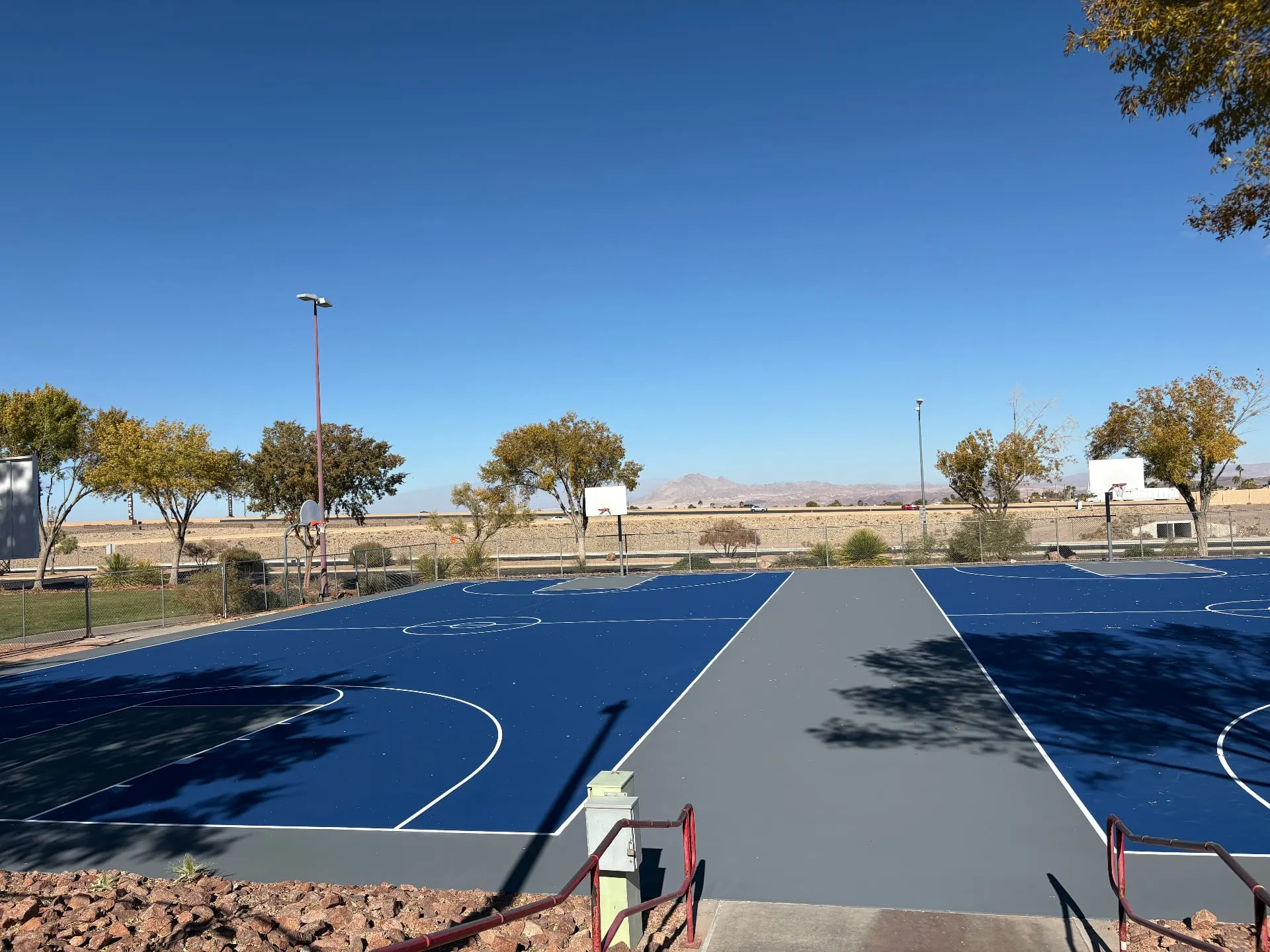
Plan to resurface a Las Vegas court every 5 to 8 years as part of regular maintenance. Sun and heat break coatings down faster here than in milder climates, so color fades and the surface texture wears smooth as UV makes the acrylic more brittle over time. Keeping to that schedule gives you reliable performance year after year and protects the court's long term durability.
If your court shows that wear and the concrete underneath is solid, resurfacing restores a like-new playing surface for a fraction of the overall cost of a new build, and it protects the appeal of the property for any potential buyers down the line. You can read how the process works on our residential resurfacing page, and someone from our crew can look over your court in person before you commit either way.
⭐⭐⭐⭐⭐
"We couldn't be more happy with On Point Court Surfacing. They were on time and on budget. The workers paid great attention to detail. They were friendly, professional, and efficient. I would recommend this company to anyone."
Can I Add Pickleball Lines to a Basketball Court?
Yes. Pickleball lines can go onto a basketball court during the same build, and homeowners and HOAs ask for it all the time. A basketball court's footprint has room for a full pickleball court laid inside it in a second color, with the corner three-point zones giving way to make space. It's the simplest way to get two sports out of one slab.
What Makes Las Vegas Different
One July afternoon we clocked a hard court slab past 150 degrees with an infrared gun. Coatings not built for that heat fade and chalk out within a season or two.
Caliche and expansive desert soil are the bigger long-term risks. A standard slab poured without accounting for that soil settles unevenly and cracks within a few seasons as the ground shifts under it.
Post-tension construction counters that movement, which is why we build to that spec as standard. Per the American Sports Builders Association's tennis court construction guidelines, post-tensioned concrete is the preferred method for court slabs, since it allows one continuous pour and cuts down on surface cracking. Our concrete cures properly and reaches full strength before we install any acrylic surface, so trapped moisture never pushes up through the concrete and blisters the coating from underneath.
Court orientation matters too. We lay out courts north to south where the site allows it, which cuts down on players staring into the low afternoon sun during peak play hours.
Monsoon season is a summer reality here, and it's why grading and drainage show up in every quote. Las Vegas hit an all-time record high of 120°F on July 7, 2024, according to the National Weather Service.
Do I Need a Permit in Las Vegas?
Yes. A basketball court in Clark County needs a permit and, in most neighborhoods, HOA architectural review before work starts. On Point manages that paperwork for you, pulls the permit, and files the HOA package as part of the project, so you are not chasing approvals on your own. Henderson applies a required setback from side and rear property lines, and Clark County has its own setback rules outside HOA-governed neighborhoods. Because rules and setbacks vary by jurisdiction and by lot, we confirm exactly what your address requires before we finalize the quote.
Real Las Vegas Projects
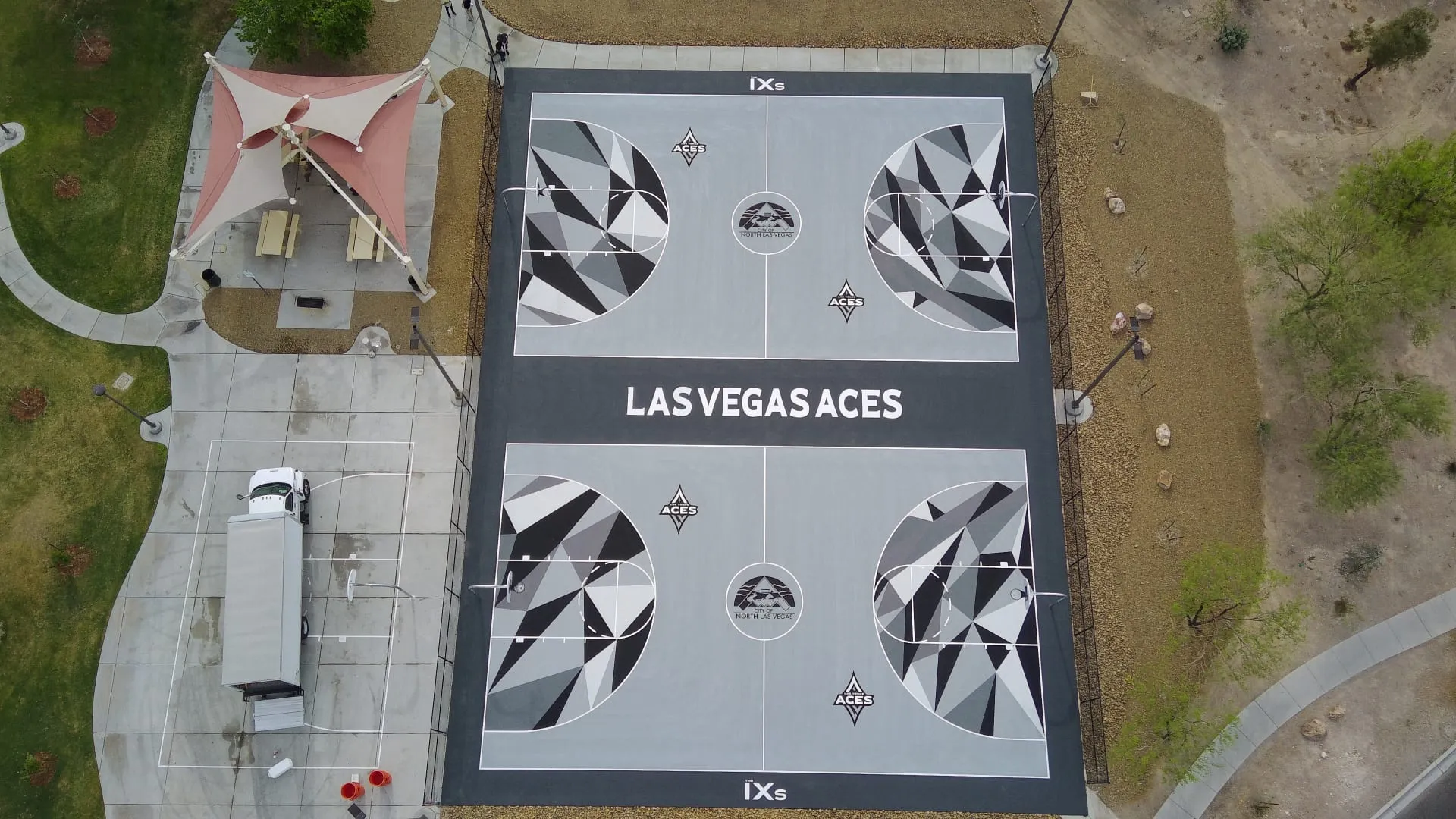
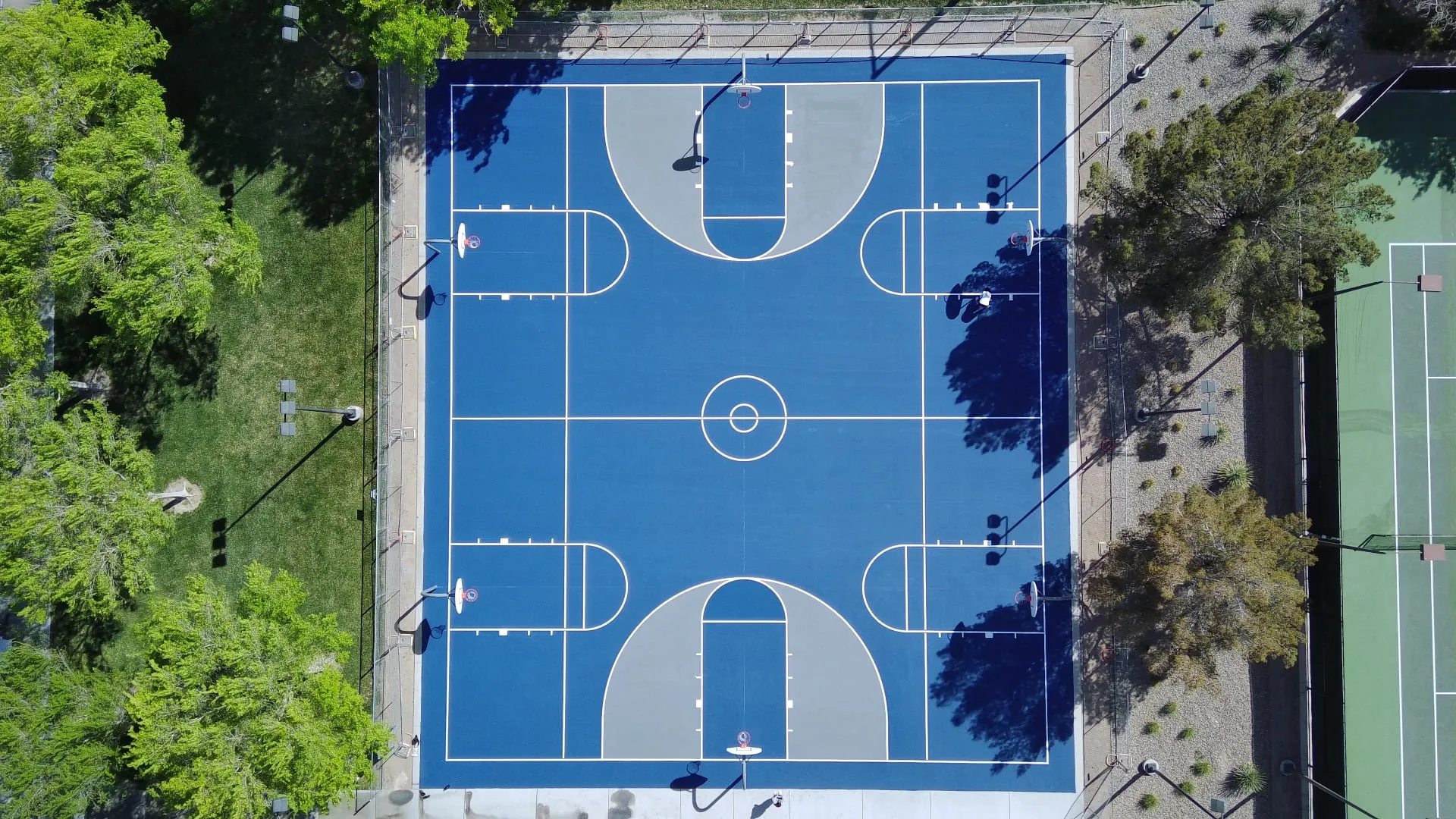
We've built and resurfaced courts across the valley. In Summerlin, we built a new two-court concrete project for a commercial property. In Henderson, we poured a new post-tension backyard court with integrated lighting, and we repaired and resurfaced a set of heavily used community courts. At Desert Horizon Park in North Las Vegas, we built two full courts branded for the Las Vegas Aces.
See these builds:
- Summerlin two-court project
- Henderson post-tension court
- Henderson crack repair and resurface
- Las Vegas Aces branded courts at Desert Horizon Park
Getting an Accurate Number
A phone estimate only goes so far. To put a real number on your project, we need your site address, rough dimensions or the space you have to work with, photos of the area, the sport lines you want, and any add-ons you are considering.
From there we schedule a site visit and give you a free, measured quote based on your actual lot instead of a national average, so you see your total investment before anything is poured. If you are still working out what size fits your space, the basketball court dimensions guide linked above is the next stop before you price the build.
Ready for real numbers on your property? Request a free quote or call (702) 686-7738.
On Point Court Surfacing is owner-operated by Brian Foley. On Point is a licensed Nevada contractor for concrete, surfacing, and fencing and builds to American Sports Builders Association standards on every court.