Pickleball Guide
How Much Does a Pickleball Court Cost in Las Vegas? (2026 Price Guide)
Published July 17, 2026
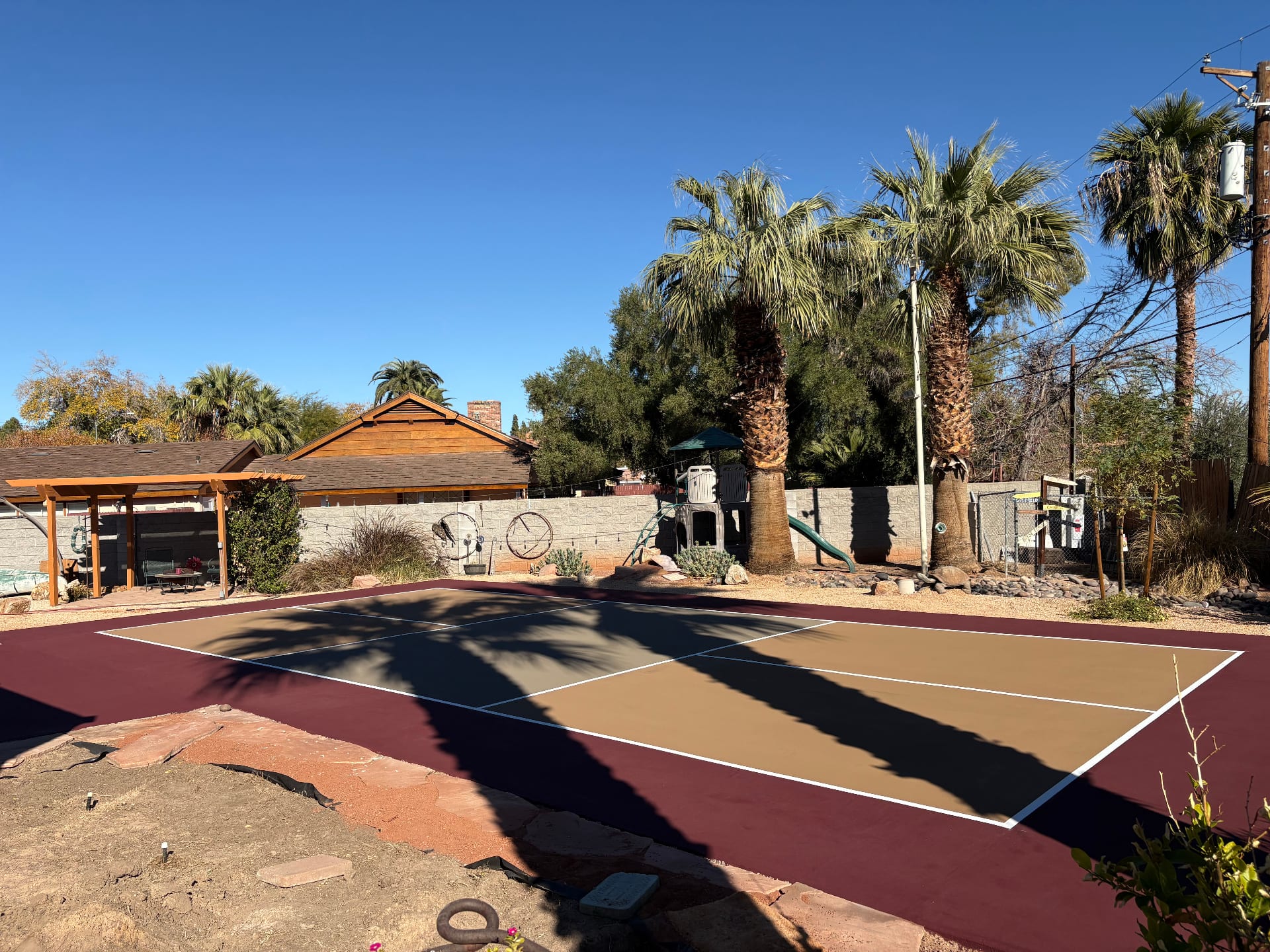
Quick answer: $16,000 to $35,000 for a new backyard court. Add-ons like fencing and lighting can push that total up by $25,000 or more.
Court size is the biggest factor in that range, and concrete type and color push it further either way. We're led by Brian Foley, who builds these courts and competes in pickleball himself, which means the surface and drainage choices here come from someone who actually plays on what he builds.
USA Pickleball's official specifications put standard pickleball court dimensions at 20 feet wide by 44 feet long, per their construction guidance. Most builds set aside additional space, closer to a 30-by-60-foot footprint, for runoff around the lines.
If you're still nailing down layout, our dimensions and space-planning breakdown covers what that footprint needs to include.
Whether the slab is post-tension (concrete reinforced with steel cables tightened after the pour) or saw-cut (concrete poured in sections with joints cut in after it sets) affects the price too. One standard color keeps your total investment lower, while a two-tone surface adds coats and labor.
What Goes Into Your Pickleball Court Construction Cost
Court construction breaks into line items, so you can budget more accurately and spot a low bid that's cutting corners. We lay out each of these components project by project on our pickleball build page, worth a look before pricing your own.
| Component | Typical Cost | Notes |
|---|---|---|
| Site prep and grading | Cost driver | Reflected in total below; depends on soil and drainage |
| Post-tension concrete slab | Cost driver | Reflected in total below; recommended for our expansive soil |
| Acrylic surface system | Cost driver | Reflected in total below; color coats add cost |
| Line striping | Cost driver | Included in the surface system, precision matters for regulation play |
| Net and posts | Cost driver | Reflected in total below |
| Perimeter fencing | Part of the add-on budget | Also a safety factor for balls and pets |
| LED lighting | Part of the add-on budget | Enables evening play |
| New court, all-in | $16,000 to $35,000 | Add-ons run up to $25,000 |
| Resurface only | $4,000 to $8,500 | Depends on the slab condition |
Individual components don't carry fixed prices on their own. Concrete and surface work scale together with whatever add-ons you choose, so the all-in and resurface totals above are what a site visit can actually confirm for your project.
Site Preparation and the Concrete Slab
Proper site preparation comes first and determines how the rest of the build holds up. Our soil carries expansive clay and caliche, a rock-hard, cemented layer that slows excavation and adds cost. On a recent Henderson job, caliche ran deeper than the grade suggested, and a breaker attachment added an extra half day before we could pour.
Without proper grading and drainage, a pad cracks within a year or two. Saw-cut concrete and asphalt bases are cheaper, but post-tension slabs are the standard in Southern Nevada, even at a premium per square foot. They hold up better against our soil. A cheap saw-cut slab to save money now usually costs more later, once cracks show up and you're paying for repair or an early rebuild.
Court Surface Materials and Color
Acrylic mixed with silica sand is one of the most popular options here, with a more consistent bounce than modular tile and better resistance to grit and dust. Color coats drive the added cost.
Cushioned, procushion-style systems come up often for shock absorption on knees and joints, but we don't spec them for outdoor courts in this market. The overlay is glued down, and slab surface temperatures in direct Las Vegas sun run well above air temperature, which is hard on that adhesive bond over time and consistent with the surfacing guidance USA Pickleball publishes for outdoor courts. A liquid-applied cushion system bonds differently and holds up better in our climate, at a higher cost.
Curing acrylic has a sharp, chemical smell in July heat. An experienced installer reads that smell to know whether the color coat is drying too fast: that's the difference between a surface that cures clean and one that develops rough patches within a year.
Is It Cheaper to Resurface Than Rebuild?
Resurfacing runs $4,000 to $8,500, well under a full rebuild. Post-tension courts already have a sound slab underneath, so they resurface fastest, and in warm weather, the job wraps in one to two days.
A slab already coated and in decent shape is a quick job; one with cracks or heavy wear needs patching first, closer to a partial rebuild. Plan on resurfacing every 5 to 8 years in Southern Nevada, with heavy play and intense UV pushing a court toward the shorter end of that window and irrigation overspray adding to the wear. The first time a court gets resurfaced costs more than every resurface after that. Prepping bare concrete to hold acrylic takes more work than recoating a surface that's already been through the process.
Key Factors That Affect Your Total
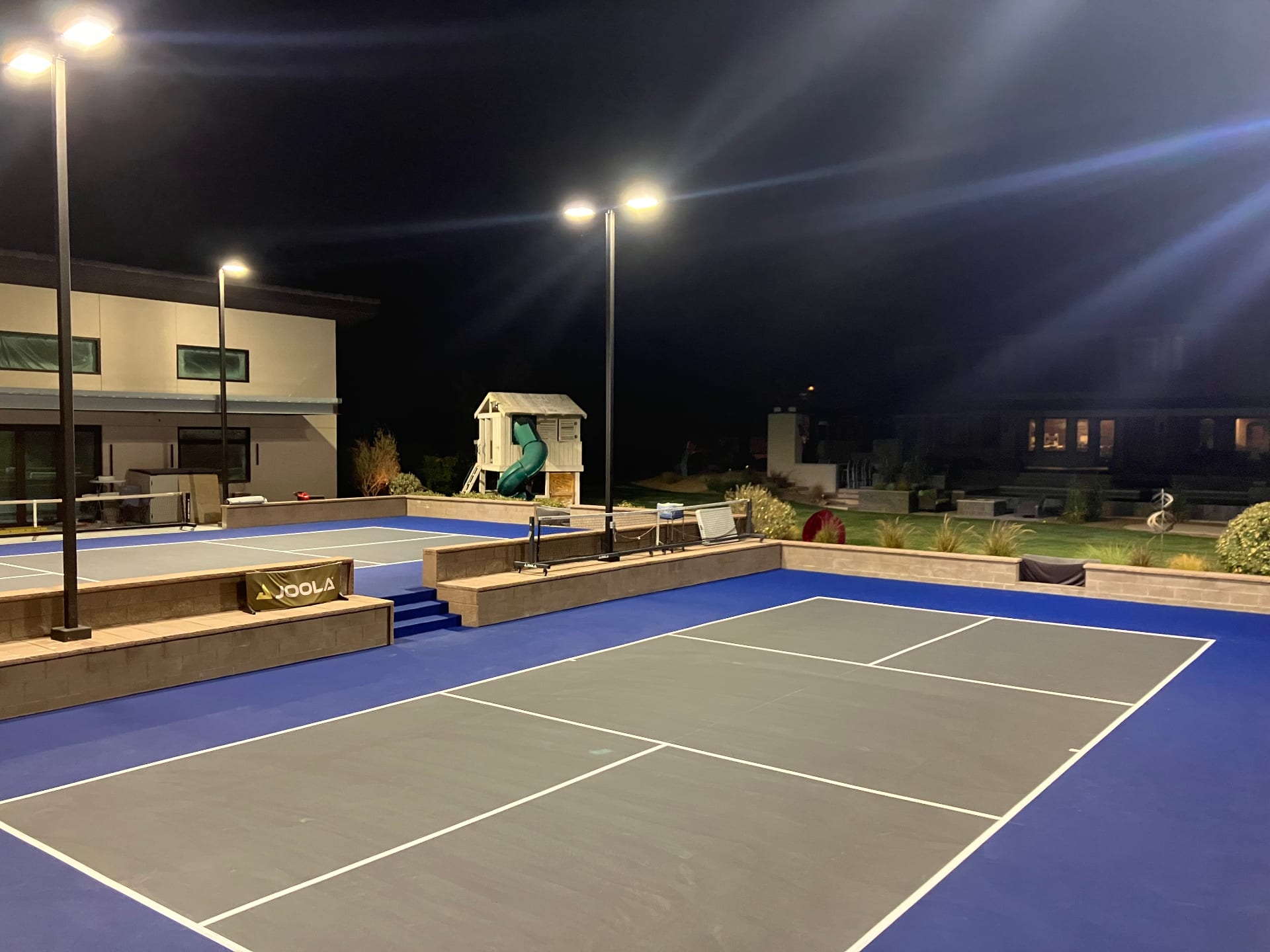
Several factors move the price, and in the Las Vegas valley, a few show up more often than homeowners expect. A sloped or poorly draining lot needs more grading, and desert hardpan doesn't always grade cleanly, so a manageable-looking slope can add a day of equipment time. Rocky soil and caliche slow excavation, and an old slab that needs breaking out adds equipment cost and haul-away on top of that.
Upgrading from standard acrylic to a cushioned, liquid-applied system adds cost per square foot. Custom two-tone colors add masking and labor, and shade structures or LED lighting add to the total on top of that. Lighting tends to pay for itself in usable hours once summer evenings are the only comfortable time to play.
Fencing, Lighting, and Other Add-Ons
Fencing keeps balls in and pets out, from basic chain-link to upgraded iron or privacy panels. Wind screens are available too, for added coverage.
LED lighting is worth it once the desert heat breaks in the evening, and it's energy-efficient enough to run several nights a week. It also improves play by cutting shadows and glare.
Backyard Pickleball Court Cost vs a Multi-Court Build
A single backyard court sits in that $16,000 to $35,000 range as a one-off project. HOAs and clubs, along with recreation centers building several courts at once, see real per-court savings: crews and equipment on site get spread across the whole project instead of just one pad.
Converting a Tennis Court to Pickleball
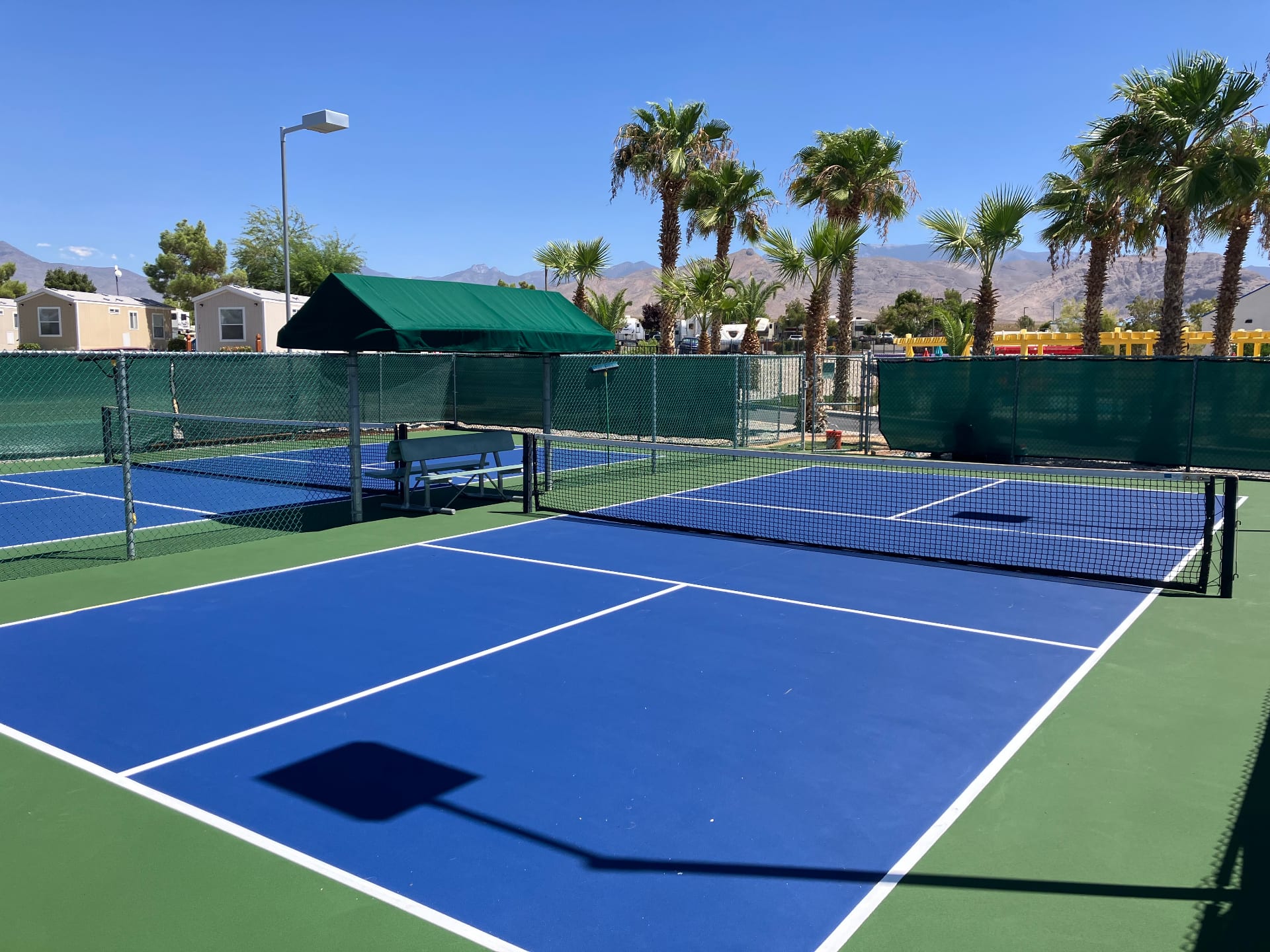
Converting an existing tennis or sports court mainly means new lines and sometimes a lower net, usually the lowest-cost path when that court is sound. Our pickleball build page covers what changes and what stays in more detail.
A full new regulation tennis court built with post-tension concrete runs $105,000 to $165,000, varying with site work and fencing. Resurfacing runs $6,000 to $15,000. Indoor pricing works differently, priced more per square foot for climate control and flooring.
Building a Pickleball Court in Las Vegas: Local Factors
Clark County and most local jurisdictions require permits for a permanent slab and structure. If you're inside an HOA community, Henderson's Green Valley and Anthem areas, Summerlin, North Las Vegas, or Lake Las Vegas, you'll also need design approval before groundbreaking. Building both into your budget and timeline up front avoids a stalled project later.
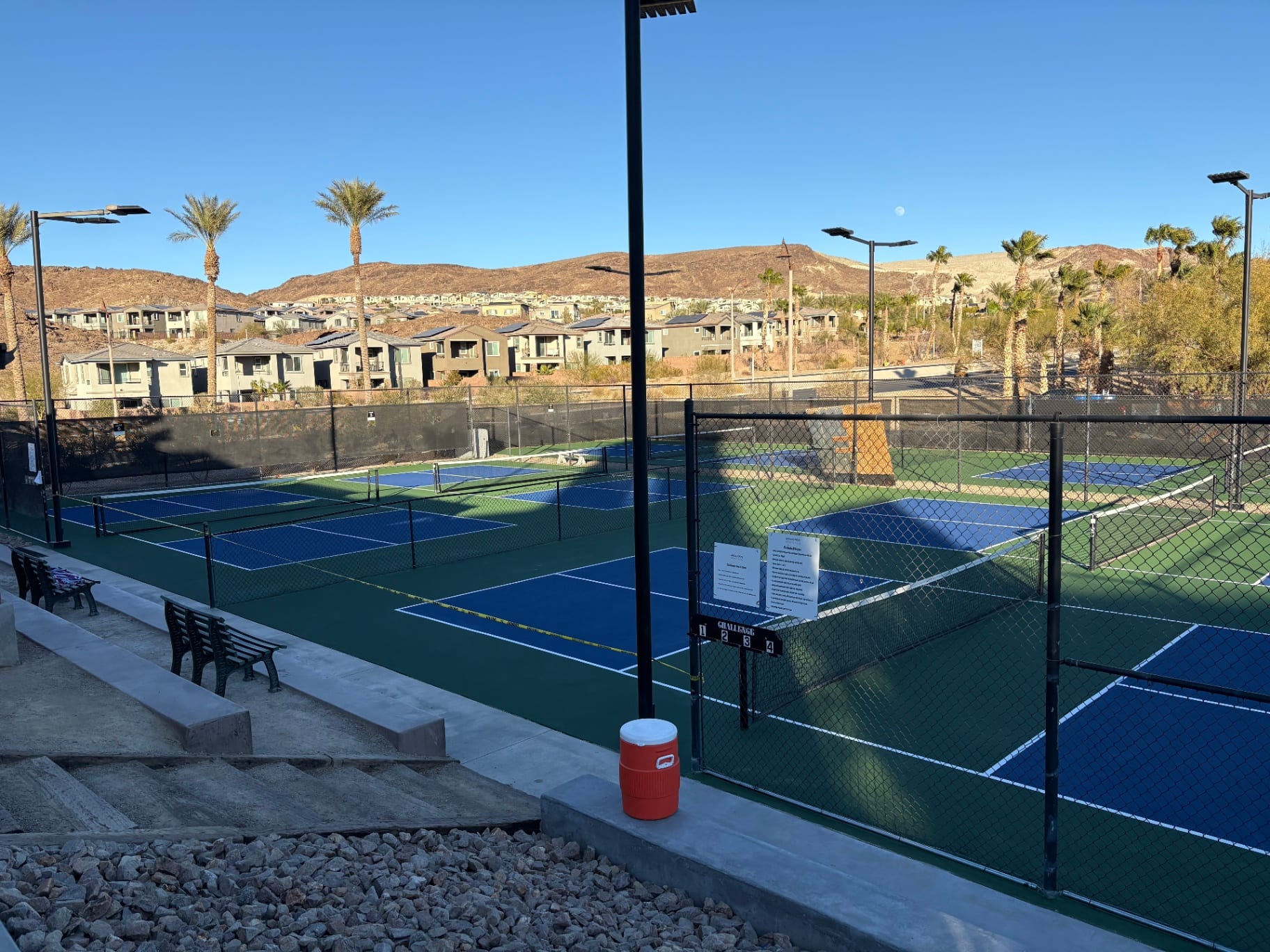
We build across the valley, from Henderson and Boulder City to Pahrump and Mesquite, where soil and drainage shift enough that a Summerlin spec isn't right near Lake Las Vegas. Recent projects include a backyard build at Lake Las Vegas, a court at Dragon Ridge in Henderson, and a multi-court install at Wine Ridge RV Resort in Pahrump, alongside courts for the Las Vegas Aces at Desert Horizon Park.
A new build takes 4 to 8 weeks from groundbreaking to final line striping.
Long-Term Maintenance Costs After You Build a Pickleball Court
Routine maintenance in Southern Nevada is mostly about staying ahead of dust and UV. Fine desert particulate works into the surface texture, and left to accumulate under irrigation overspray, it speeds up wear. Power washing two to four times a year covers a court with moderate play. Nets and posts take harder UV punishment here than in most climates, so check tension and hardware at the start and end of summer.
Budget a small resurfacing reserve from day one. A court that skips that schedule with a low-cost contractor tends to need a full resurface rather than a routine recoat once it finally comes in for work.
Getting an Accurate Number for Your Court
We hold Nevada contractor licenses for surfacing and fencing (#0090686) and concrete (#0095035), and we're members of the American Sports Builders Association. Every lot is different, so the fastest way to a real number is to get in touch to set up a site visit.
⭐⭐⭐⭐⭐
"The pickleball court came out perfect. Great color and exact dimensions. I would recommend them for quality and competitive cost."
Call (702) 686-7738, with no change-order surprises after the fact.